The Winery Giagnacovo of Molise
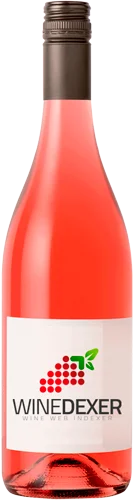
Winery Giagnacovo
The winery offers 7 different wines
3.8


Note - 1Note - 1Note - 1Note - 0.5Note - 0
Its wines get an average rating of 3.8.
It is ranked in the top 75 of the estates of Molise.
It is located in Molise
Find the Winery Giagnacovo on Facebook

The Winery Giagnacovo is one of the world's great estates. It offers 7 wines for sale in of Molise to come and discover on site or to buy online.
Top Winery Giagnacovo wines

Looking for the best Winery Giagnacovo wines in Molise among all the wines in the region? Check out our tops of the best red, white or effervescent Winery Giagnacovo wines. Also find some food and wine pairings that may be suitable with the wines from this area. Learn more about the region and the Winery Giagnacovo wines with technical and enological descriptions.

The top pink wines of Winery Giagnacovo

Food and wine pairings with a pink wine of Winery Giagnacovo

How Winery Giagnacovo wines pair with each other generally quite well with dishes such as recipes .

The best vintages in the pink wines of Winery Giagnacovo

  • 0With an average score of 3.80/5

Discovering the wine region of Molise

Molise is a mountainous region in South-central Italy, delegated as DOC in 1998. It is a relatively small region, especially when compared to its neighbors Abruzzo and Lazio to the North and Campania and Puglia to the south. Molise is considered an obscure region, since winemaking dates back to 500 BC, but it only gained independence as a wine region in the latter half of the 20th century. Overshadowed by its neighbor, Abruzzo, of which it was politically a Part until 1963 (Abruzzi e Molise), Molise finally got three of its own DOCs, Biferno and Pentro di Isernia, in the 1980s, then Tintilia del Molise in 2011.

About two percent of Molise's wine production is DOC quality. Biferno wines are produced in the province of Campobasso and include reds, whites and rosés.

The top red wines of Winery Giagnacovo

Food and wine pairings with a red wine of Winery Giagnacovo

How Winery Giagnacovo wines pair with each other generally quite well with dishes of beef, pasta or lamb such as recipes of beef with panang curry (red curry), chinese fried shrimp ravioli or tomatoes, zucchini, potatoes stuffed moroccan style with....

Organoleptic analysis of red wines of Winery Giagnacovo

In the mouth the red wine of Winery Giagnacovo. is a powerful with a lot of tannins present in the mouth.

The best vintages in the red wines of Winery Giagnacovo

  • 2015With an average score of 4.10/5
  • 2012With an average score of 4.10/5
  • 0With an average score of 3.85/5
  • 2017With an average score of 3.80/5
  • 2018With an average score of 3.60/5
  • 2013With an average score of 3.60/5

The grape varieties most used in the red wines of Winery Giagnacovo.

  • Tintilia

Discover the grape variety: Gringet

Gringet is an ancient grape variety. It comes from the Arve valley, in Haute Savoie. It is very similar to Savagnin. This white grape variety has small bunches. Its berries are small, round and have a yellow-green skin that turns golden yellow when ripe. Generally, the gringet opens 10 days after the chasselas. Its production remains reasonable. Due to its drooping growth habit, it is recommended that this variety be trained and pruned short, as it is very sensitive to mildew and also fears erinosis and powdery mildew. It is one of those grape varieties that have an average second ripening period. It produces a wine that is light and lively at the same time, with some floral notes. It can also be used to make sparkling or semi-sparkling wines.

Discover other wineries and winemakers neighboring the Winery Giagnacovo

Planning a wine route in the of Molise? Here are the wineries to visit and the winemakers to meet during your trip in search of wines similar to Winery Giagnacovo.

Discover the grape variety: Chaouch

The certain origin is not known. We can simply say that this variety was once widely cultivated in Turkey, it is still found in Spain, Italy, Greece, Hungary, Macedonia, Romania, Dalmatia, Serbia, Ukraine, Bulgaria, Russia, North Africa, ... in France it is almost unknown except for some amateur gardeners. Note that it can sometimes be confused with the Beirut date palm, they have the same two synonyms rozaki and afuz ali.