The Winery Frédéric Berne of Morgon of Beaujolais
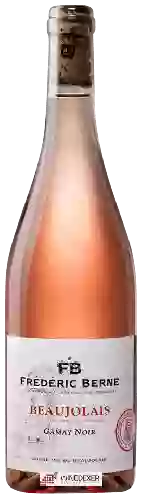
The Winery Frédéric Berne is one of the world's great estates. It offers 8 wines for sale in of Morgon to come and discover on site or to buy online.
Looking for the best Winery Frédéric Berne wines in Morgon among all the wines in the region? Check out our tops of the best red, white or effervescent Winery Frédéric Berne wines. Also find some food and wine pairings that may be suitable with the wines from this area. Learn more about the region and the Winery Frédéric Berne wines with technical and enological descriptions.
How Winery Frédéric Berne wines pair with each other generally quite well with dishes such as recipes .
Morgon is one of the ten Beaujolais crus located on the slopes of the Beaujolais hills, on the west bank of the Saône. The appellation applies only to red wines made from the Gamay Grape. Some white grapes are allowed in the Final blend: Chardonnay, Aligoté and Melon de Bourgogne. Although there are no officially defined quantities for these varieties, Morgon's blend is controlled by limiting the proportion of these varieties that are allowed in the Vineyard to a maximum of 15%.
The wines produced here tend to be denser than those produced in most other regions of Beaujolais. They often have cherry and black fruit characters and a Fleshy, juicy Texture that is not common in Beaujolais wines. Morgon wines age so distinctly and consistently that the name of the region is often used as a verb to describe this: "il morgonne" ("it morgons"). As with most other Beaujolais crus, the wines are generally made using the traditional method of semi-carbonic Maceration known as "macération traditionelle".
How Winery Frédéric Berne wines pair with each other generally quite well with dishes of pasta, veal or pork such as recipes of pasta alla norma, duck breast with orange sauce or stuffed peppers.
On the nose the red wine of Winery Frédéric Berne. often reveals types of flavors of cherry, cranberry or non oak and sometimes also flavors of earth, red fruit or cassis. In the mouth the red wine of Winery Frédéric Berne. is a with a nice freshness.
Servanin is native to the south of Savoie and the north of Isère. Its berries are short, oval and small to medium-sized. The bunches are full, cylindrical and small, some of them winged, and the bluish-black colour at the beginning turns to dark black when the grapes reach full maturity. Then, as time goes by, small green berries are gradually added to the vine. This curtain is completed by the light green of the medium-sized leaves.servanin is fertile and robust. Its only weak points are millerandage, citadels and mildew. It is less susceptible to grey rot. Although it buds early, it ripens rather late, in the second half of the year. This liqueur, which belongs to the Vin-de-Savoie, has a medium alcoholic and somewhat acidic taste. This wine is also called martelet, servagnin or serene. Unfortunately, it is noted that this variety has nowadays practically disappeared.
Planning a wine route in the of Morgon? Here are the wineries to visit and the winemakers to meet during your trip in search of wines similar to Winery Frédéric Berne.
Gamay is a Burgundian grape variety that has existed since the 14th century. For fear of competition with the pinot noir of Burgundy, gamay was finally uprooted and planted in the Beaujolais region, from Mâcon to Lyon. These siliceous and granitic soils suit it perfectly, and it gives its best here. But it is also planted all over France, such as in Lorraine, in the Loire Valley, in Bugey, in Savoie and in Auvergne. Gamay is early and very productive and needs to be limited so that quality prevails over quantity. Short winter pruning of the shoots and high density of vines per hectare are the methods that allow it to produce very fruity, fresh and greedy red wines. Gamay is also very popular in red wine futures, and produces wines from the Beaujolais region with very interesting character and ageing potential. The AOCs Crémant-de-Bourgogne, Mâcon, Anjou, Touraine, Rosé de vallée de la Loire, Côtes-d'Auvergne, Saint-Pourçain, Bugey, Gaillac, Côtes du Luberon... and many vins de pays are proud of it. Today, about 36,000 hectares of Gamay are cultivated in France, including 22,000 hectares in Beaujolais.