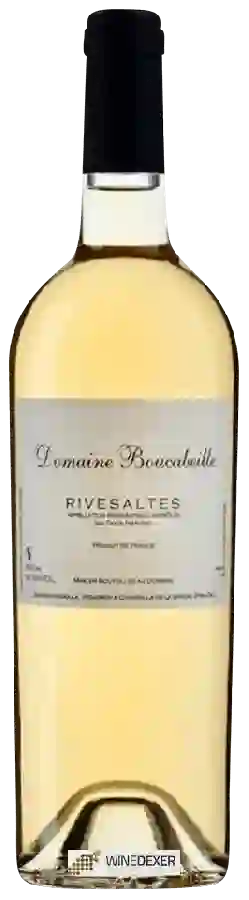
Domaine BoucabeilleRivesaltes Amber
 Sweet wine


This wine generally goes well with poultry, rich fish (salmon, tuna etc) or shellfish.

Wine flavors and olphactive analysis

Food and wine pairings with Rivesaltes Amber
Pairings that work perfectly with Rivesaltes Amber



Original food and wine pairings with Rivesaltes Amber
The Rivesaltes Amber of Domaine Boucabeille matches generally quite well with dishes of rich fish (salmon, tuna etc), shellfish or poultry such as recipes of salmon carpaccio with pink berries and shallots, bouillabaisse like in marseille or baked chicken legs.
Details and technical informations about Domaine Boucabeille's Rivesaltes Amber.
Discover the grape variety: Dattier de Beyrouth
Table grape with long clusters and elongated golden berries (date-shaped, hence the name), thin skin and crunchy flesh, with a pleasant sweet flavour. Very rarely vinified. Grown in the eastern Mediterranean (Lebanon, Syria, Turkey, Greece), southern Europe and North Africa, prized for its attractive appearance and extended cold-storage life. Historic white table grape variety originating from the Levant (probably Lebanon).
Last vintages of this wine

The best vintages of Rivesaltes Amber from Domaine Boucabeille are 2014, 2012, 2015
Informations about the Domaine Boucabeille
The Domaine Boucabeille is one of of the world's greatest estates. It offers 12 wines for sale in the of Rivesaltes to come and discover on site or to buy online.

The wine region of Rivesaltes
Great Roussillon appellation for Vins Doux Naturels, ~5,200 ha across Pyrénées-Orientales and Aude. Mutage with neutral spirit halts fermentation. 4 signature styles: Grenat on black Grenache with intense notes of candied cherry, kirsch and cocoa; oxidative Tuilé with prune, coffee, walnut and caramel; Ambré (white Grenache) with honey, candied orange, dried fruits; fruity Rosé strawberry. Exceptional ageing (10-50 years).
The wine region of Languedoc-Roussillon
Largest single French vineyard, dominated by sunny, generous reds. Spicy Syrah, candied Grenache (ripe fruit, garrigue), structured Carignan, deep Mourvèdre, supple Cinsault. Stars: structured Corbières, Minervois, Faugères, Saint-Chinian; round Côtes-du-Roussillon. Legendary vins doux naturels: Banyuls and Maury (fortified Grenache) with notes of cocoa, fig, prune.
The word of the wine: Maderised
Term used to designate oxidized wines in reference to Madeira wines.


