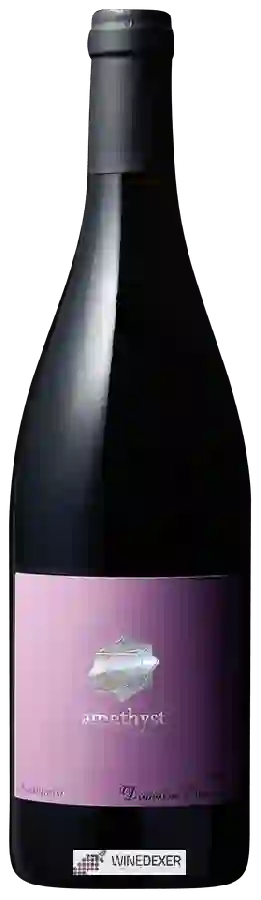
Domaine BoucabeilleAmethyst Rouge
 Red wine



In the mouth this red wine is a powerful.
This wine generally goes well with poultry, beef or lamb.

Taste structure of the Amethyst Rouge from the Domaine Boucabeille
Light | Bold | |
Smooth | Tannic | |
Dry | Sweet | |
Soft | Acidic |
In the mouth the Amethyst Rouge of Domaine Boucabeille in the region of Languedoc-Roussillon is a powerful.
Food and wine pairings with Amethyst Rouge
Pairings that work perfectly with Amethyst Rouge



Original food and wine pairings with Amethyst Rouge

The Amethyst Rouge of Domaine Boucabeille matches generally quite well with dishes of beef, pasta or lamb such as recipes of ramen burger, salmon cannelloni or marielle's lamb and eggplant parmentier.
Details and technical informations about Domaine Boucabeille's Amethyst Rouge.
Discover the grape variety: Raisaine
Simple, fresh dry whites with a pale golden robe, a supple palate and preserved acidity, with understated aromas of white flowers, citrus (lemon) and herbal notes. A rustic profile now almost absent from commercial viticulture. Preserved in INRAE varietal collections, it bears witness to the pre-phylloxera ampelographic diversity of the South-West. Rare French white grape, once grown in the South-West and studied for its heritage value.
Last vintages of this wine
The best vintages of Amethyst Rouge from Domaine Boucabeille are 2018
Informations about the Domaine Boucabeille
The Domaine Boucabeille is one of of the world's greatest estates. It offers 12 wines for sale in the of Côtes du Roussillon to come and discover on site or to buy online.

The wine region of Côtes du Roussillon
Catalan sun and Mediterranean character on the edge of the Pyrenees. Fleshy, sun-soaked reds with signature notes of candied black fruit (blackberry, plum), garrigue, pepper, liquorice and dark chocolate, firm tannins and generous warmth. Blends of Grenache (roundness), Syrah (spice), old-vine Carignan (power) and dense Mourvèdre. Also sunny rosés and ample whites (Grenache Blanc, Macabeu).
The wine region of Languedoc-Roussillon
Largest single French vineyard, dominated by sunny, generous reds. Spicy Syrah, candied Grenache (ripe fruit, garrigue), structured Carignan, deep Mourvèdre, supple Cinsault. Stars: structured Corbières, Minervois, Faugères, Saint-Chinian; round Côtes-du-Roussillon. Legendary vins doux naturels: Banyuls and Maury (fortified Grenache) with notes of cocoa, fig, prune.
The word of the wine: Density per hectare
Number of vines per hectare. For the same yield, a vine planted with 3,000 vines per hectare bears many more bunches (per vine) than a vine planted with 10,000. The grapes will therefore be less rich in sugar and polyphenols (tannins, aromas...).


