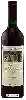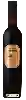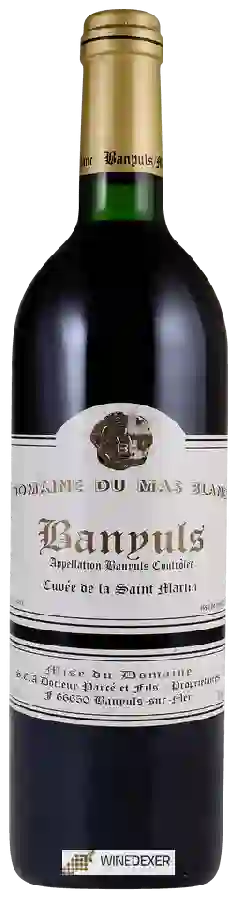
Domaine du Mas BlancCuvée de la Saint Martin Banyuls
 Natural sweet wine


This wine generally goes well with beef and mature and hard cheese.

Food and wine pairings with Cuvée de la Saint Martin Banyuls
Pairings that work perfectly with Cuvée de la Saint Martin Banyuls


Original food and wine pairings with Cuvée de la Saint Martin Banyuls
The Cuvée de la Saint Martin Banyuls of Domaine du Mas Blanc matches generally quite well with dishes of beef or mature and hard cheese such as recipes of tournedos with foie gras or croque monsieur with 4 cheeses.
Details and technical informations about Domaine du Mas Blanc's Cuvée de la Saint Martin Banyuls.
Discover the grape variety: White muscat
Aromatic, refined whites with a fragrant palate and preserved acidity, showing intense, signature muscat aromas of rose, orange blossom, citrus, exotic fruits (lychee, mango), fresh grape and honey. Made as crisp dry, sparkling (Asti DOCG) and great naturally sweet wines (Beaumes-de-Venise AOC, Muscat de Rivesaltes AOC, Frontignan AOC, Lunel AOC, Samos PDO). Ancient Mediterranean variety, one of the oldest cultivated worldwide, ancestor of many muscats.
Last vintages of this wine

The best vintages of Cuvée de la Saint Martin Banyuls from Domaine du Mas Blanc are 1979
Informations about the Domaine du Mas Blanc
The Domaine du Mas Blanc is one of of the world's greatest estates. It offers 22 wines for sale in the of Banyuls to come and discover on site or to buy online.

The wine region of Banyuls
AOC natural sweet wine of the Catalan Côte Vermeille, spectacular schist terrace vineyards facing the Mediterranean. Black Grenache fortified with alcohol (min. 50%, min. 75% in Grand Cru).
The wine region of Languedoc-Roussillon
Largest single French vineyard, dominated by sunny, generous reds. Spicy Syrah, candied Grenache (ripe fruit, garrigue), structured Carignan, deep Mourvèdre, supple Cinsault. Stars: structured Corbières, Minervois, Faugères, Saint-Chinian; round Côtes-du-Roussillon. Legendary vins doux naturels: Banyuls and Maury (fortified Grenache) with notes of cocoa, fig, prune.
The word of the wine: Sarment
Vine shoot of the year.