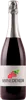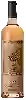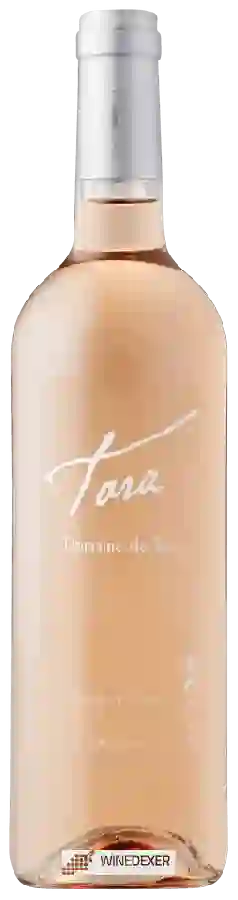
Domaine de TaraTerre d’Ocres Rosé
 Pink wine



This wine generally goes well with beef, lamb or mature and hard cheese.

Food and wine pairings with Terre d’Ocres Rosé
Pairings that work perfectly with Terre d’Ocres Rosé



Original food and wine pairings with Terre d’Ocres Rosé

The Terre d’Ocres Rosé of Domaine de Tara matches generally quite well with dishes of beef, lamb or spicy food such as recipes of picadillo, lamb mice confit in port wine or chicken colombo.
Details and technical informations about Domaine de Tara's Terre d’Ocres Rosé.
Discover the grape variety: Sweet Sapphire
Seedless (pip-free) table grape with long clusters and very elongated cylindrical blue-black berries with thin skin and crunchy flesh, sweet and fresh on the palate. Grown in California, China and Spain for export markets, prized for its striking elongated shape that catches the eye at premium counters. American black seedless table grape variety bred for fresh consumption.
Last vintages of this wine
The best vintages of Terre d’Ocres Rosé from Domaine de Tara are 2017, 2016
Informations about the Domaine de Tara
The Domaine de Tara is one of of the world's greatest estates. It offers 9 wines for sale in the of Vaucluse to come and discover on site or to buy online.

The wine region of Vaucluse
Vast southern IGP between Ventoux, Luberon and the Rhône: signature Grenache, Syrah and Mourvèdre as fruity, sun-drenched reds with notes of cherry, raspberry, blackberry, garrigue (thyme, rosemary), Mediterranean spices and a peppery touch, supple tannins and a moreish finish. Cinsault and Carignan in support. Signature fresh rosés (strawberry, citrus). Viognier, Grenache Blanc and Clairette in whites.
The wine region of Méditerranée
Vast IGP of south-east France (Provence, Vaucluse, Var, Corsica, Ardèche), 75% rosés. Fresh, fruity rosés with signature notes of strawberry, raspberry, citrus, white flowers and a Mediterranean touch, taut and thirst-quenching on the palate — the quintessential sunny aperitif. Supple reds blending Grenache, Syrah, Cabernet and Merlot (red fruits, garrigue, spice), full whites of Viognier (apricot, flowers) and Chardonnay. Generous everyday wines, expression of the south.
The word of the wine: Rosé de saignée
A method of making rosé wine that consists of partially draining a vat of red wine after a few hours of maceration. The longer the maceration, the stronger the colour. This practice gives rich and expressive rosés.