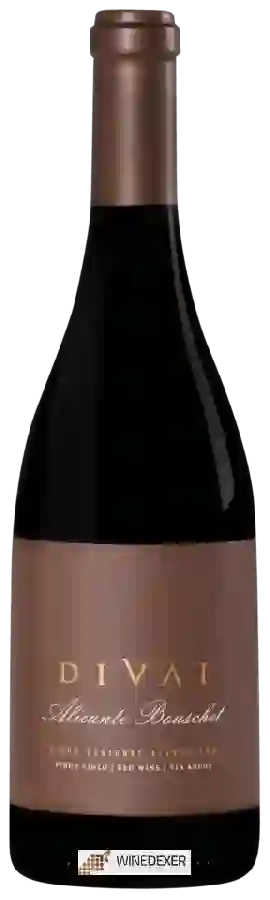
Winery DivaiAlicante Bouschet
 Red wine


In the mouth this red wine is a powerful with a nice balance between acidity and tannins.
This wine generally goes well with poultry, beef or veal.

Taste structure of the Alicante Bouschet from the Winery Divai
Light | Bold | |
Smooth | Tannic | |
Dry | Sweet | |
Soft | Acidic |
In the mouth the Alicante Bouschet of Winery Divai in the region of Alentejano is a powerful with a nice balance between acidity and tannins.
Food and wine pairings with Alicante Bouschet
Pairings that work perfectly with Alicante Bouschet



Original food and wine pairings with Alicante Bouschet

The Alicante Bouschet of Winery Divai matches generally quite well with dishes of beef, pasta or veal such as recipes of pasta al forno (baked pasta), pasta with sausage or sauté of veal with olives (corsica).
Details and technical informations about Winery Divai's Alicante Bouschet.
Discover the grape variety: Schönburger
Supple and aromatic reds to drink young with a clear ruby robe, soft tannins and an airy palate with fresh acidity, signature musky aromas, red fruits (cherry, raspberry) and floral notes. Fresh northern profile. Grown in Germany, England and Canada, well-adapted to northern viticultural climates, offering accessible reds. German black grape obtained in 1979 at Geisenheim (Pinot Noir x Pirovano 1).
Last vintages of this wine
The best vintages of Alicante Bouschet from Winery Divai are 2016, 0
Informations about the Winery Divai
The Winery Divai is one of of the world's greatest estates. It offers 12 wines for sale in the of Alentejano to come and discover on site or to buy online.

The wine region of Alentejano
Star of southern Portugal's great reds, sunny and opulent wines. Typical blends: round fruity Aragonez (Tempranillo), spicy Trincadeira, Touriga Nacional (black fruits, violet), deep teinturier Alicante Bouschet, juicy Castelão. Fleshy reds with notes of plum, black cherry, cocoa and sweet spices, melted tannins. Ample fresh Antão Vaz and Arinto whites.
The word of the wine: AOC
Appellation d'origine contrôlée. The most prestigious category of French wines created in the 1930s on the basis of quality criteria defined by a geographical delimitation, a chosen grape variety and precise production rules.