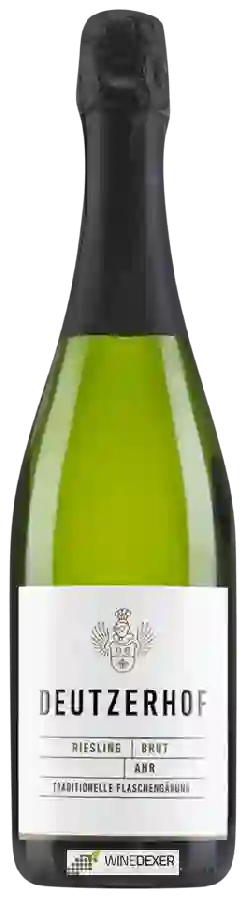
Winery DeutzerhofRiesling-Sekt Brut
 Sparkling wine



This wine generally goes well with pork, vegetarian or poultry.

Wine flavors and olphactive analysis



On the nose the Riesling-Sekt Brut of Winery Deutzerhof in the region of Ahr often reveals types of flavors of earth, oak or tree fruit and sometimes also flavors of citrus fruit.
Food and wine pairings with Riesling-Sekt Brut
Pairings that work perfectly with Riesling-Sekt Brut



Original food and wine pairings with Riesling-Sekt Brut



The Riesling-Sekt Brut of Winery Deutzerhof matches generally quite well with dishes of pork, rich fish (salmon, tuna etc) or spicy food such as recipes of chicken pie, salmon à la plancha with vegetables or quick coconut milk chicken.
Details and technical informations about Winery Deutzerhof's Riesling-Sekt Brut.
Discover the grape variety: Riesling
Crystalline, taut whites with vibrant acidity and aromas of citrus, green apple, white flowers, vineyard peach and mineral/petrol notes with age. Made as dry (Trocken, Alsace), off-dry (Kabinett, Spätlese) and sweet (Auslese, Beerenauslese, Trockenbeerenauslese, late harvest). Star of the Moselle, Rheingau, Alsace AOC and Wachau. Also exported to Clare Valley and Finger Lakes.
Last vintages of this wine
The best vintages of Riesling-Sekt Brut from Winery Deutzerhof are 2011, 0
Informations about the Winery Deutzerhof
The Winery Deutzerhof is one of of the world's greatest estates. It offers 52 wines for sale in the of Ahr to come and discover on site or to buy online.

The wine region of Ahr
Small German valley south of Bonn, the country's largest contiguous single red-grape zone. Signature Spatburgunder (Pinot Noir) (>60%): elegant, structured reds with signature notes of cherry, raspberry, wild strawberry, undergrowth and sweet spice, silky tannins and taut freshness — Burgundian style in an improbable climate. Also early Fruhburgunder, fleshier. ~560 ha on steep slopes over schist and slate, sheltered temperate microclimate.
The word of the wine: Farm
Wine dominated by a strong acidity and/or biting tannins. In this case, the components of the wine need to melt, i.e. to harmonize during the maturation in the cellar.


