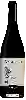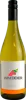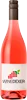
Winery DeAngelis (De Angelis)Quinto Rosso
 Red wine



In the mouth this red wine is a with a nice freshness.
This wine generally goes well with poultry, beef or veal.
Taste structure of the Quinto Rosso from the Winery DeAngelis (De Angelis)
Light | Bold | |
Smooth | Tannic | |
Dry | Sweet | |
Soft | Acidic |
In the mouth the Quinto Rosso of Winery DeAngelis (De Angelis) in the region of Marche is a with a nice freshness.
Food and wine pairings with Quinto Rosso
Pairings that work perfectly with Quinto Rosso



Original food and wine pairings with Quinto Rosso

The Quinto Rosso of Winery DeAngelis (De Angelis) matches generally quite well with dishes of beef, pasta or veal such as recipes of beef stew, three ways to prepare chinese noodles or festive chinese fondue.
Details and technical informations about Winery DeAngelis (De Angelis)'s Quinto Rosso.
Discover the grape variety: Ribolla gialla
A very old grape variety that has been cultivated for a long time in Italy, more precisely in the Friuli region. It can also be found in Slovenia, Greece (island of Cephalonia), in the United States (California), ... and it should not be confused with the robola or rombola aspri cultivated in Greece (Ionian islands).
Last vintages of this wine
The best vintages of Quinto Rosso from Winery DeAngelis (De Angelis) are 2014, 0, 2013
Informations about the Winery DeAngelis (De Angelis)
The Winery DeAngelis (De Angelis) is one of of the world's great estates. It offers 23 wines for sale in the of Marche to come and discover on site or to buy online.

The wine region of Marche
Marche (or Le Marche; pronounced Mar-kay) is a region in eastern CentralItaly. It is most associated with white wines made from Trebbiano and Verdicchio grapes. Marche occupies a roughly triangular area. Its longer sides are formed by the Apennine Mountains to the west and the Adriatic Sea to the east.
The word of the wine: Drawing (liqueur de)
In champagne and sparkling wines of traditional method, addition to the wine, at the time of bottling (tirage) of sugars and yeasts dissolved in wine. These components will provoke the second fermentation in the bottle leading to the formation of carbon dioxide bubbles.