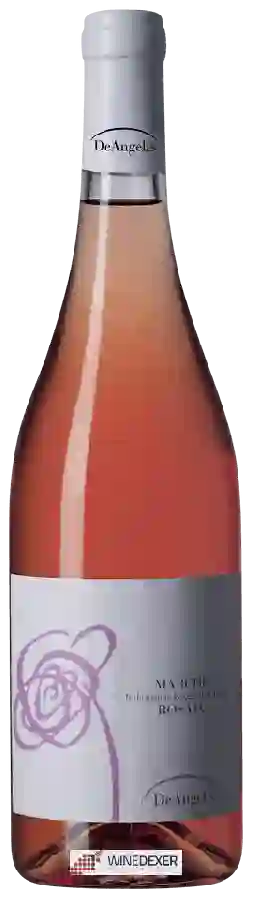
Winery DeAngelis (De Angelis)Marche Rosato
 Pink wine


This wine generally goes well with pork, vegetarian or veal.
Food and wine pairings with Marche Rosato
Pairings that work perfectly with Marche Rosato



Original food and wine pairings with Marche Rosato


The Marche Rosato of Winery DeAngelis (De Angelis) matches generally quite well with dishes of lamb, veal or pork such as recipes of semolina-merguez salad, roast veal with milk and rosemary or pan-fried black pudding with apples.
Details and technical informations about Winery DeAngelis (De Angelis)'s Marche Rosato.
Discover the grape variety: Allegro
Interspecific cross between chancellor and rondo obtained in 1983 and in Germany by Ernst Rühl.
Last vintages of this wine

The best vintages of Marche Rosato from Winery DeAngelis (De Angelis) are 2018, 2015, 0, 2017 and 2019.
Informations about the Winery DeAngelis (De Angelis)
The Winery DeAngelis (De Angelis) is one of of the world's greatest estates. It offers 23 wines for sale in the of Marche to come and discover on site or to buy online.

The wine region of Marche
Marche (or Le Marche; pronounced Mar-kay) is a region in eastern CentralItaly. It is most associated with white wines made from Trebbiano and Verdicchio grapes. Marche occupies a roughly triangular area. Its longer sides are formed by the Apennine Mountains to the west and the Adriatic Sea to the east.
The word of the wine: Green
Said of a wine that is too acidic or marked by unpleasant vegetal tastes.