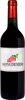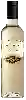
Winery De MartinoLegado Late Harvest Limited Edition
 Sweet wine


This wine generally goes well with poultry, rich fish (salmon, tuna etc) or shellfish.
Food and wine pairings with Legado Late Harvest Limited Edition
Pairings that work perfectly with Legado Late Harvest Limited Edition



Original food and wine pairings with Legado Late Harvest Limited Edition

The Legado Late Harvest Limited Edition of Winery De Martino matches generally quite well with dishes of rich fish (salmon, tuna etc), shellfish or sweet desserts such as recipes of sea bass wrapped in salt crust, pasta with mussels or real chocolate cake.
Details and technical informations about Winery De Martino's Legado Late Harvest Limited Edition.
Discover the grape variety: Muscadoule
This direct-producing hybrid is the result of an interspecific cross between Villard blanc and Muscat de Hambourg, obtained in 1937 by Galibert Alfred and Coulondre Eric. Almost no longer multiplied, it is now clearly on the verge of extinction.
Last vintages of this wine

The best vintages of Legado Late Harvest Limited Edition from Winery De Martino are 2005, 0, 2006
Informations about the Winery De Martino
The Winery De Martino is one of of the world's great estates. It offers 145 wines for sale in the of Maipo Valley to come and discover on site or to buy online.

The wine region of Maipo Valley
Maipo Valley is one of Chile's most important wine-producing regions. Located just South of the capital, Central-valley/maipo-valley/santiago">Santiago, Maipo Valley is home to some of the country's most prestigious wines. It is often described as the 'Bordeaux of South America', and Rich, fruit-driven Cabernet Sauvignon is undoubtedly its most celebrated wine style. Maipo is at the very Northern end of Chile's extensive Central Valley, running from just north of the Rapel Valley up to where the countryside begins to give way to houses and roads in the southern suburbs of Santiago.
The wine region of Central Valley
The Central Valley (El Valle Central) of Chile is one of the most important wine-producing areas in South America in terms of Volume. It is also one of the largest wine regions, stretching from the Maipo Valley (just south of Santiago) to the southern end of the Maule Valley. This is a distance of almost 250 miles (400km) and covers a number of Climate types. The Central Valley wine region is easily (and often) confused with the geological Central Valley, which runs north–south for more than 620 miles (1000km) between the Pacific Coastal Ranges and the lower Andes.
The word of the wine: Feedback
Perception of the aromas in the mouth by the retro-nasal way.