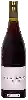
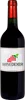
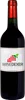
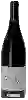
The Domaine de Chassorney of Burgundy
Domaine de Chassorney
The winery offers 79 different wines
4.0


Note - 1Note - 1Note - 1Note - 1Note - 0
Its wines get an average rating of 4.
It is ranked in the top 1177 of the estates of Burgundy.
It is located in Burgundy

The Domaine de Chassorney is one of the best wineries to follow in Bourgogne.. It offers 79 wines for sale in of Burgundy to come and discover on site or to buy online.

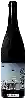
Top Domaine de Chassorney wines

Looking for the best Domaine de Chassorney wines in Burgundy among all the wines in the region? Check out our tops of the best red, white or effervescent Domaine de Chassorney wines. Also find some food and wine pairings that may be suitable with the wines from this area. Learn more about the region and the Domaine de Chassorney wines with technical and enological descriptions.

The top red wines of Domaine de Chassorney

Food and wine pairings with a red wine of Domaine de Chassorney

How Domaine de Chassorney wines pair with each other generally quite well with dishes of beef, veal or game (deer, venison) such as recipes of daube niçoise, vitello alla genovese (roast veal with sponge cake) or rabbit with leeks.

Organoleptic analysis of red wines of Domaine de Chassorney

On the nose the red wine of Domaine de Chassorney. often reveals types of flavors of tree fruit, citrus fruit or cherry and sometimes also flavors of oaky, earthy or red fruit. In the mouth the red wine of Domaine de Chassorney. is a with a nice freshness.

The best vintages in the red wines of Domaine de Chassorney

  • 2005With an average score of 4.40/5
  • 2006With an average score of 4.16/5
  • 2012With an average score of 4.12/5
  • 0With an average score of 4.10/5
  • 2014With an average score of 4.10/5
  • 2017With an average score of 4.03/5

The grape varieties most used in the red wines of Domaine de Chassorney.

  • Pinot Noir
  • Gamay
  • Grenache
  • Shiraz/Syrah
  • Poulsard
  • Aramon

Discovering the wine region of Burgundy

Bourgogne is the catch-all regional appellation title of the Burgundy wine region in eastern France ("Bourgogne" is the French name for Burgundy). Burgundy has a Complex and comprehensive appellation system; counting Premier Cru and Grand Cru titles, the region has over 700 appellation titles for its wines. Thus, Burgundy wines often come from one Vineyard (or several separate vineyards) without an appellation title specific to the region, Village or even vineyard. A standard Burgundy wine may be made from grapes grown in one or more of Burgundy's 300 communes.

Unlike Burgundy's village appellations, which specialize in red or white wines or a combination of both, Burgundy covers red, white and rosé wines, and even Sparkling wines as in the case of Crémant de Bourgogne and Bourgogne Mousseux. Each Burgundy appellation may be followed by the Color of the wine (white, red or rosé), as appropriate, and if not already implied by the appellation itself. Red Burgundy is produced almost exclusively from Pinot Noir grapes and is Distinguished from White Burgundy, which is produced from white grapes (mainly Chardonnay). A key difference between Burgundy wines and those produced under the Village, Premier Cru and Grand Cru appellations is that the grape variety used in the wine can be indicated on the label.

This has contributed to the perception and marketing of Burgundy wines in foreign markets, where a Burgundy Pinot Noir or a Burgundy Chardonnay is much easier to sell. To accommodate the different styles of wine produced in Burgundy, there are six key Burgundy appellations: Burgundy itself, Burgundy Aligoté (limited to the named white grape variety with other regulations distinguishing it from the generic regional appellation), "Bourgogne Mousseux", "Bourgogne Grand Ordinaire", Bourgogne Passe-tout and Crémant de Bourgogne. There are even two appellations dedicated to the region's brandies: Eau-de-vie de Vin de Bourgogne and Eau-de-vie de Marc de Bourgogne. Some of the above appellations may be suffixed with the name of the sub-region, village or vineyard where the grapes were grown.

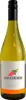
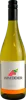
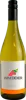
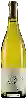
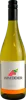
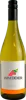
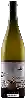
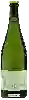
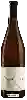
The top white wines of Domaine de Chassorney

Food and wine pairings with a white wine of Domaine de Chassorney

How Domaine de Chassorney wines pair with each other generally quite well with dishes of pasta, rich fish (salmon, tuna etc) or shellfish such as recipes of spaghetti carbonara, salt crusted sea bass or spaghetti with squid ink (italy).

Organoleptic analysis of white wines of Domaine de Chassorney

On the nose the white wine of Domaine de Chassorney. often reveals types of flavors of grapefruit, citrus or butter and sometimes also flavors of microbio, oak or citrus fruit. In the mouth the white wine of Domaine de Chassorney. is a powerful with a nice freshness.

The best vintages in the white wines of Domaine de Chassorney

  • 2010With an average score of 4.30/5
  • 2018With an average score of 4.29/5
  • 2015With an average score of 4.23/5
  • 2007With an average score of 4.20/5
  • 2008With an average score of 4.18/5
  • 2017With an average score of 4.18/5

The grape varieties most used in the white wines of Domaine de Chassorney.

  • Chardonnay
  • Savagnin
  • Aligoté
  • Pinot Noir
  • Grenache Blanc
  • Bourboulenc

Discover the grape variety: Aligoté

Aligoté is an ancient Burgundian grape variety (it has different names depending on the region in which it is grown: griset blanc in Beaune, giboudot blanc in the Chalonnais or troyen blanc in the Aube), mainly used in the production of Bourgogne-Aligoté, Bouzeron and Crémant-de-Bourgogne.aligoté is a medium-fine white grape variety, quite productive, which gives clear, acidic, fresh and light white wines. An anecdote often says that it was a member of the clergy named Kir who gave it its letters of nobility by adding it to blackcurrant cream to prepare an aperitif.produced on more than 1,600 hectares in Burgundy, aligoté has also been exported. It is also cultivated in Eastern Europe (Ukraine, Romania), California, Canada and Chile, representing more than 20,000 hectares in the world.

The top pink wines of Domaine de Chassorney

Food and wine pairings with a pink wine of Domaine de Chassorney

How Domaine de Chassorney wines pair with each other generally quite well with dishes of pasta, vegetarian or appetizers and snacks such as recipes of simple chinese noodle soup, quiche without eggs or tuna samoussa.

Organoleptic analysis of pink wines of Domaine de Chassorney

On the nose the pink wine of Domaine de Chassorney. often reveals types of flavors of citrus fruit.

The best vintages in the pink wines of Domaine de Chassorney

  • 0With an average score of 3.90/5
  • 2011With an average score of 3.60/5

The grape varieties most used in the pink wines of Domaine de Chassorney.

  • Grenache
  • Cinsault

The word of the wine: Dismantling

After devatting, the pomace is removed from the tank. If this operation is carried out manually, it is important to ventilate the vat well to avoid the risk of accidents due to the presence of carbon dioxide.

Discover other wineries and winemakers neighboring the Domaine de Chassorney

Planning a wine route in the of Burgundy? Here are the wineries to visit and the winemakers to meet during your trip in search of wines similar to Domaine de Chassorney.

Discover the grape variety: Carignan

Mainly cultivated in the Languedoc region, carignan originates from Spain. Because of its very resistant branches, it is often called hardwood. Its bunches are quite large. They are compact and winged with a lignified stalk. The berries are spherical in shape and take on a bluish-black colour. Carignan has a total of 25 approved clones, the best known of which are 274, 65 and 9. The carignan buds at the beginning of June and is protected from spring frosts. It does not reach maturity until the third period. Also, this grape variety needs warmth and sunshine. It appreciates dry and not very fertile soils. Carignan vines can live for more than 100 years. Those that are more than 30 years old produce a better wine. This wine is well coloured. It is generous and powerful at the same time. Pepper, cherry, blackberry, banana, raspberry, almond, prune and violet are some of the aromas that this grape variety gives off.