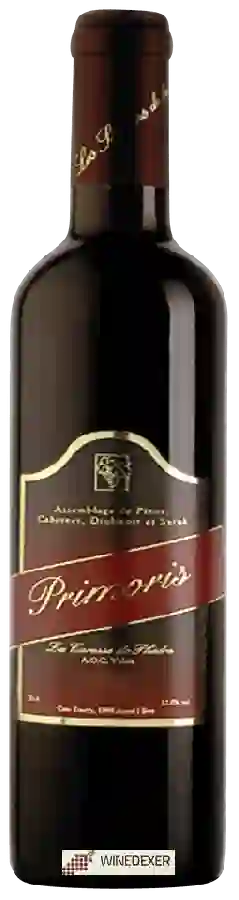
Cave EmeryPrimoris La Caresse de Phèdre
 Red wine


This wine is a blend of 2 varietals which are the Diolinoir and the Pinot noir.
This wine generally goes well with pork, poultry or beef.

Food and wine pairings with Primoris La Caresse de Phèdre
Pairings that work perfectly with Primoris La Caresse de Phèdre



Original food and wine pairings with Primoris La Caresse de Phèdre



The Primoris La Caresse de Phèdre of Cave Emery matches generally quite well with dishes of beef, lamb or veal such as recipes of american style beef marinade, leg of lamb brissac (leftover leg of lamb) or puchero.
Details and technical informations about Cave Emery's Primoris La Caresse de Phèdre.
Discover the grape variety: Diolinoir
Deeply coloured, structured reds with a dense purple robe, smooth tannins and fresh acidity, with aromas of blackcurrant, blackberry, black cherry, soft spice and floral notes. Round palate, fruity finish. Vinified as single varietal and in modern red blends in French-speaking Switzerland (Valais, Vaud, Geneva), contributing colour and structure to contemporary cuvées. Swiss variety created in 1970 at the Pully station, a red cross of Diolly × Pinot Noir.
Last vintages of this wine

The best vintages of Primoris La Caresse de Phèdre from Cave Emery are 2015, 2017, 0, 2014
Informations about the Cave Emery
The Cave Emery is one of of the world's great estates. It offers 28 wines for sale in the of Valais to come and discover on site or to buy online.

The wine region of Valais
Switzerland's largest vineyard, capital of native grapes. Straight, precise alpine whites: light, floral Chasselas (Fendant), signature Petite Arvine with saline, grapefruit and rhubarb notes, rich, apricoty Amigne, mineral Humagne Blanche. Altitude reds: fine Pinot Noir, crisp Gamay, native Cornalin and Humagne Rouge, spicy and deep. Highly precise alpine age-worthy wines.
The word of the wine: Pommadé
Said of a wine that is unbalanced, pasty, syrupy, and whose excessive sugar content gives an impression of heaviness.