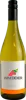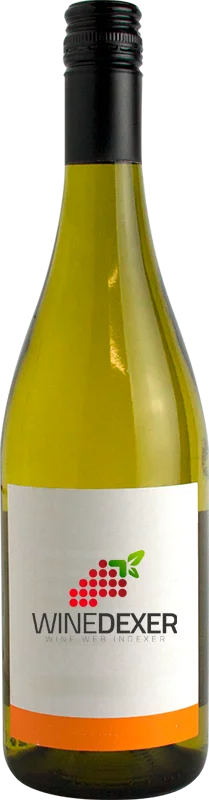
Cedar Creek WineryUnoaked Chardonnay
 White wine
This wine generally goes well with pork, vegetarian or poultry.
Food and wine pairings with Unoaked Chardonnay
Pairings that work perfectly with Unoaked Chardonnay



Original food and wine pairings with Unoaked Chardonnay

The Unoaked Chardonnay of Cedar Creek Winery matches generally quite well with dishes of pork, rich fish (salmon, tuna etc) or vegetarian such as recipes of nanie's diced ham quiche, rice with tuna and tomato or leek, goat cheese and bacon quiche.
Details and technical informations about Cedar Creek Winery's Unoaked Chardonnay.
Discover the grape variety: Chardonnay
The white Chardonnay is a grape variety that originated in France (Burgundy). It produces a variety of grape specially used for wine making. It is rare to find this grape to eat on our tables. This variety of grape is characterized by small bunches, and small grapes. White Chardonnay can be found in many vineyards: South West, Burgundy, Jura, Languedoc & Roussillon, Cognac, Bordeaux, Beaujolais, Savoie & Bugey, Loire Valley, Champagne, Rhone Valley, Armagnac, Lorraine, Alsace, Provence & Corsica.
Informations about the Cedar Creek Winery
The Cedar Creek Winery is one of of the world's great estates. It offers 20 wines for sale in the of Wisconsin to come and discover on site or to buy online.

The wine region of Wisconsin
Wisconsin is a Midwestern state located on the western shore of Lake Michigan. Although wine making dates back to the mid-19th century, Wisconsin's wine industry is small and focuses primarily on cold-hardy Hybrid varieties developed specifically for the colder Climates of the Northern half of North America. Valiant, Edelweiss, La Crosse and Frontenac are among the most widely planted varieties in Wisconsin vineyards. Wisconsin covers 170,000 km², between latitudes 42°N and 47°N.
The word of the wine: Glycerol
Alcohol very present in wine (after ethyl alcohol) and which reinforces its unctuousness and fatty sensation.