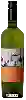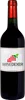
Winery Casa GrandeCabernet Franc
 Red wine



This wine generally goes well with pork, poultry or beef.
Food and wine pairings with Cabernet Franc
Pairings that work perfectly with Cabernet Franc



Original food and wine pairings with Cabernet Franc

The Cabernet Franc of Winery Casa Grande matches generally quite well with dishes of beef, pork or game (deer, venison) such as recipes of chinese fondue, pork cheeks confit in cider or rabbit and mushroom gibelotte.
Details and technical informations about Winery Casa Grande's Cabernet Franc.
Discover the grape variety: Cabernet franc
Cabernet Franc is one of the oldest red grape varieties in Bordeaux. The Libourne region is its terroir where it develops best. The terroirs of Saint-Emilion and Fronsac allow it to mature and develop its best range of aromas. It is also the majority in many blends. The very famous Château Cheval Blanc, for example, uses 60% Cabernet Franc. The wines produced with Cabernet Franc are medium in colour with fine tannins and subtle aromas of small red fruits and spices. When blended with Merlot and Cabernet Sauvignon, it brings complexity and a bouquet of aromas to the wine. It produces fruity wines that can be drunk quite quickly, but whose great vintages can be kept for a long time. It is an earlier grape variety than Cabernet Sauvignon, which means that it is planted as far north as the Loire Valley. In Anjou, it is also used to make sweet rosé wines. Cabernet Franc is now used in some twenty countries in Europe and throughout the world.
Last vintages of this wine
The best vintages of Cabernet Franc from Winery Casa Grande are 2019, 2018, 0, 2017 and 2015.
Informations about the Winery Casa Grande
The Winery Casa Grande is one of of the world's greatest estates. It offers 14 wines for sale in the of Canelones to come and discover on site or to buy online.

The wine region of Canelones
The Canelones administrative department, Northeast of the Uruguayan capital of Montevideo, is home to the majority of Uruguay's Vineyards and accounts for aRound 60 percent of all wine produced in the country. It Lies in the South of the small South American country, where the majority of vines are planted, inland from the Atlantic coast and the Rio de la Plata estuary. The region itself covers a broad arc approximately 50km (30 miles) Deep, drawn clockwise from the northwestern outskirts of Montevideo round to the coastline east of the capital city. The eponymous administrative capital of the region lies 50km (31 miles) to the north of Montevideo.
The word of the wine: Phenolic ripeness
A distinction is made between the ripeness of sugars and acids and the ripeness of tannins and other compounds such as anthocyanins and tannins, which will bring structure and colour. Grapes can be measured at 13° potential without having reached this phenolic maturity. Vinified at this stage, they will give hard, astringent wines, without charm.