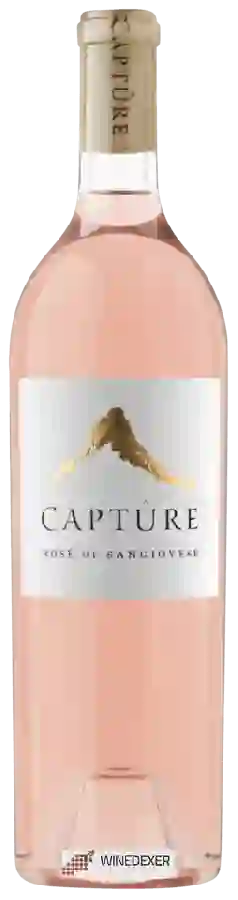
Winery CaptûreRosé of Sangiovese
 Pink wine


This wine generally goes well with pork, poultry or beef.
Food and wine pairings with Rosé of Sangiovese
Pairings that work perfectly with Rosé of Sangiovese



Original food and wine pairings with Rosé of Sangiovese



The Rosé of Sangiovese of Winery Captûre matches generally quite well with dishes of beef, veal or pork such as recipes of braised beef with carrots, traditional veal stew or steamed pork chops.
Details and technical informations about Winery Captûre's Rosé of Sangiovese.
Discover the grape variety: Sangiovese
Originally from Italy, it is the famous Sangiovese of Tuscany producing the famous wines of Brunello de Montalcino and Chianti. This variety is registered in the Official Catalogue of Wine Grape Varieties, list A1. According to recent genetic analysis, it is the result of a natural cross between the almost unknown Calabrese di Montenuovo (mother) and Ciliegiolo (father).
Last vintages of this wine
The best vintages of Rosé of Sangiovese from Winery Captûre are 2019, 0
Informations about the Winery Captûre
The Winery Captûre is one of of the world's greatest estates. It offers 14 wines for sale in the of Sonoma County to come and discover on site or to buy online.

The wine region of Sonoma County
The wine region of Sonoma County is located in the region of North Coast of California of United States. We currently count 1105 estates and châteaux in the of Sonoma County, producing 2365 different wines in conventional, organic and biodynamic agriculture. The wines of Sonoma County go well with generally quite well with dishes .
The wine region of California
California is the largest and most important wine region in the United States. It represents the southern two-thirds (850 miles or 1,370 kilometers) of the country's west coast. (Oregon and Washington make up the rest. ) The state also spans nearly 10 degrees of latitude.
The word of the wine: Muscat blanc à petits grains
A white grape variety cultivated since antiquity on the shores of the Mediterranean, it is considered the noblest of the muscats. It is mainly used to make sweet wines, often from mutage. In France, it is the sole variety used in many natural sweet wines: muscat-de-frontignan, muscat-de-mireval, muscat-de-lunel, muscat-de-saint-jean-de-minervois, muscat-de-beaumes-de-venise, muscat-du-cap-corse. Combined with Muscat d'Alexandrie, it gives Muscat-de-Rivesaltes. It is also used to make sparkling white wines (clairette-de-die; moscato d'asti and asti spumante in Italy) and dry wines (alsace-muscat). Powerfully aromatic and complex, its wines evoke fresh grapes, roses, exotic fruits, citrus fruits and spices.