The Winery Broken Stone of Ontario
The Winery Broken Stone is one of the world's great estates. It offers 18 wines for sale in of Ontario to come and discover on site or to buy online.
Looking for the best Winery Broken Stone wines in Ontario among all the wines in the region? Check out our tops of the best red, white or effervescent Winery Broken Stone wines. Also find some food and wine pairings that may be suitable with the wines from this area. Learn more about the region and the Winery Broken Stone wines with technical and enological descriptions.
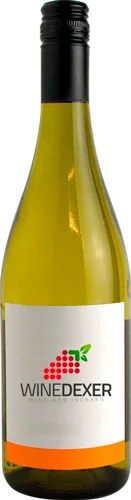
How Winery Broken Stone wines pair with each other generally quite well with dishes of pork, rich fish (salmon, tuna etc) or vegetarian such as recipes of salty crumble with courgettes, goat cheese and bacon, baked salmon mediterranean style or quiche with leeks and fresh salmon from flo.
On the nose the white wine of Winery Broken Stone. often reveals types of flavors of microbio, oak or tree fruit and sometimes also flavors of earth. In the mouth the white wine of Winery Broken Stone. is a powerful with a nice freshness.
Ontario is the most populated and prolific wine producing province in Canada. The Long established wine industry here is centered around the Great Lakes of Erie and Ontario, where the continental Climate is moderated heavily by the large bodies of water.
The majority of wines produced in Ontario are Dry table wines (around 60 percent are white and 40 percent red). They are mostly made from Riesling, Cabernet Franc, Chardonnay, and Pinot Noir.
However, the province is best known internationally for its ice wines, made mostly from Vidal or Riesling. Sunny summers in Ontario are followed by cold winters, making it an ideal setting for the production of the style.
More ice wine is made here than anywhere else in the world.
A number of curiosities are also produced in the province, including the relatively common mutation of Chardonnay called Chardonnay Musqué, Sparkling ice wine, and a growing trend to produce wines from Dried and semi-dried grapes in an amarone style.
Ontario covers around 415,000 square miles (1. 1 million square kilometers) of land, making it the fourth-largest province in Canada. Four out of the five Great Lakes have shorelines in the province, and the vast Hudson Bay touches Ontario's Northern border.
Ontario subregions and growing conditions
Most viticulture takes place in the Southern Part of the state in three officially-designated regional appellations
Niagara Peninsula Complex and fragmented (see below)
Lake Erie North Shore This includes Pelee Island, Canada's southernmost wine region
Prince Edward County Another peninsula, on limestone.
How Winery Broken Stone wines pair with each other generally quite well with dishes of beef, pork or game (deer, venison) such as recipes of braised beef with carrots, andouillette with mustard sauce or giant paella cooked on a wood fire.
On the nose the red wine of Winery Broken Stone. often reveals types of flavors of earth, oak or red fruit.
Direct producer hybrid, interspecific cross between MN 1094 and Ravat noir obtained in 1989 by Peter Hemstad and James Luby at the University of Minnesota Research Center (United States). Note that it is the cousin of the black frontenac and the grandson of the pinot noir. It can be found in North America, Canada, ... in France it is almost unknown.
How Winery Broken Stone wines pair with each other generally quite well with dishes of pork, rich fish (salmon, tuna etc) or spicy food such as recipes of pork gyros, salmon lasagna or couscous without couscous maker.
On the nose the sparkling wine of Winery Broken Stone. often reveals types of flavors of earth, microbio or tree fruit and sometimes also flavors of tropical fruit.
Characteristic of a wine that is either aromatically deviant or unbalanced on the palate due to an excess or a lack of one or more flavors.
Planning a wine route in the of Ontario? Here are the wineries to visit and the winemakers to meet during your trip in search of wines similar to Winery Broken Stone.
Cabernet Franc is one of the oldest red grape varieties in Bordeaux. The Libourne region is its terroir where it develops best. The terroirs of Saint-Emilion and Fronsac allow it to mature and develop its best range of aromas. It is also the majority in many blends. The very famous Château Cheval Blanc, for example, uses 60% Cabernet Franc. The wines produced with Cabernet Franc are medium in colour with fine tannins and subtle aromas of small red fruits and spices. When blended with Merlot and Cabernet Sauvignon, it brings complexity and a bouquet of aromas to the wine. It produces fruity wines that can be drunk quite quickly, but whose great vintages can be kept for a long time. It is an earlier grape variety than Cabernet Sauvignon, which means that it is planted as far north as the Loire Valley. In Anjou, it is also used to make sweet rosé wines. Cabernet Franc is now used in some twenty countries in Europe and throughout the world.