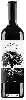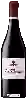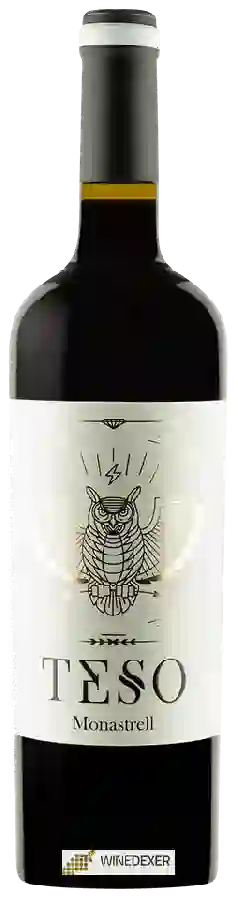
Bodegas AlberoTeso Monastrell
 Red wine


In the mouth this red wine is a powerful with a nice balance between acidity and tannins.
This wine generally goes well with beef, game (deer, venison) or lamb.

Taste structure of the Teso Monastrell from the Bodegas Albero
Light | Bold | |
Smooth | Tannic | |
Dry | Sweet | |
Soft | Acidic |
In the mouth the Teso Monastrell of Bodegas Albero in the region of Castille is a powerful with a nice balance between acidity and tannins.
Wine flavors and olphactive analysis






On the nose the Teso Monastrell of Bodegas Albero in the region of Castille often reveals types of flavors of non oak, earth or oak and sometimes also flavors of spices, red fruit or black fruit.
Food and wine pairings with Teso Monastrell
Pairings that work perfectly with Teso Monastrell



Original food and wine pairings with Teso Monastrell

The Teso Monastrell of Bodegas Albero matches generally quite well with dishes of beef, pasta or lamb such as recipes of beef pot au feu (grandma's style), lasagna bolognese or leg or shoulder of lamb with honey and thyme.
Details and technical informations about Bodegas Albero's Teso Monastrell.
Discover the grape variety: Barbaroux
Fresh, fruity rosés and clarets with a pale pink colour, a supple palate and preserved acidity showing signature aromas of red fruits (strawberry, raspberry), flowers and Mediterranean notes. An airy Provençal profile for early drinking. Preserved for its heritage value, it contributes to the identity of traditional Provençal rosés.
Last vintages of this wine

The best vintages of Teso Monastrell from Bodegas Albero are 2016, 0, 2017
Informations about the Bodegas Albero
The Bodegas Albero is one of of the world's greatest estates. It offers 29 wines for sale in the of Castille to come and discover on site or to buy online.

The wine region of Castille
Cradle of great Castilian reds, high-altitude plateaus (450-1000 m) along the Duero. Tempranillo king (aka Tinta de Toro, Tinto Fino): powerful, concentrated, structured reds with notes of black cherry, plum, leather, tobacco and spice, firm tannins from altitude and cool nights. Stars: Ribera del Duero (Vega Sicilia, Pingus), fleshy Toro, Bierzo (floral, mineral Mencía). Lively, herbaceous Verdejo whites from Rueda.
The word of the wine: Stabilization
All the treatments intended for the good conservation of wines.