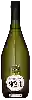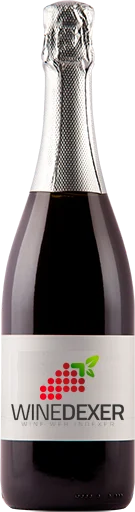
Winery BiasiottoSui Lieviti Zero 15
 Sparkling wine



In the mouth this sparkling wine is a with a nice vivacity and a fine and pleasant bubble.
This wine generally goes well with vegetarian, appetizers and snacks or shellfish.
Taste structure of the Sui Lieviti Zero 15 from the Winery Biasiotto
Light | Bold | |
Soft | Acidic | |
Gentle | Fizzy |
In the mouth the Sui Lieviti Zero 15 of Winery Biasiotto in the region of Friuli-Venezia Giulia is a with a nice vivacity and a fine and pleasant bubble.
Food and wine pairings with Sui Lieviti Zero 15
Pairings that work perfectly with Sui Lieviti Zero 15



Original food and wine pairings with Sui Lieviti Zero 15


The Sui Lieviti Zero 15 of Winery Biasiotto matches generally quite well with dishes of shellfish, vegetarian or appetizers and snacks such as recipes of lamb curry indian style, broccoli and blue cheese quiche without pastry or radicchio and pancetta rolls.
Details and technical informations about Winery Biasiotto's Sui Lieviti Zero 15.
Discover the grape variety: Orion
Interspecific crossing between the optima and the white Villard obtained in 1964 and in Germany by Gerhardt Erich Allweldt (1927-2005). It can be found in Germany, Denmark, the Netherlands, Switzerland, Sweden, Russia, ... not or little known in France.
Last vintages of this wine
The best vintages of Sui Lieviti Zero 15 from Winery Biasiotto are 2015, 0, 2016
Informations about the Winery Biasiotto
The Winery Biasiotto is one of of the world's greatest estates. It offers 12 wines for sale in the of Friuli-Venezia Giulia to come and discover on site or to buy online.

The wine region of Friuli-Venezia Giulia
Friuli-Venezia Giulia is an autonomous region in Italy, located in the extreme Northeast of the country, bordered by Austria and Slovenia to the north and east respectively. The eponymous wine region has four DOCGs, twelve DOCs and three PGIs and is best known for its white wine production. 77% of the region's wines are white, one of the highest proportions of any Italian region. The region's wines are distinctly different from other Italian wines in that they are made from non-traditional Grape varieties such as Sauvignon blanc, Riesling and Pinot blanc, as well as typically Italian varieties such as pinot gris and picolit.
The word of the wine: Champagne rosé
Often obtained by adding red wines (from Champagne), it is even the only vineyard where this practice is allowed. Some producers prefer the practice used in other regions, i.e. a short maceration to extract sufficient colouring matter. This results in winey rosés for meals. Elegant aperitif rosé is more often made from red wine coloured Chardonnay. Rosés can be vintage or non vintage.