The Winery Beyerskloof of Stellenbosch of Western Cape
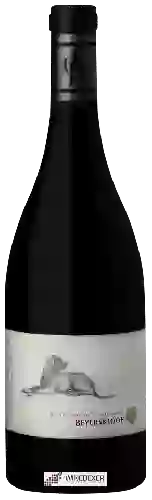
The Winery Beyerskloof is one of the largest wineries in the world. It offers 26 wines for sale in of Stellenbosch to come and discover on site or to buy online.
Looking for the best Winery Beyerskloof wines in Stellenbosch among all the wines in the region? Check out our tops of the best red, white or effervescent Winery Beyerskloof wines. Also find some food and wine pairings that may be suitable with the wines from this area. Learn more about the region and the Winery Beyerskloof wines with technical and enological descriptions.
How Winery Beyerskloof wines pair with each other generally quite well with dishes of beef, game (deer, venison) or poultry such as recipes of hungarian goulash, ramen (noodle) soup or buns.
On the nose the red wine of Winery Beyerskloof. often reveals types of flavors of cream, cherry or oaky and sometimes also flavors of smoke, earthy or blackberry. In the mouth the red wine of Winery Beyerskloof. is a powerful with a nice balance between acidity and tannins.
The wine region of Stellenbosch is located in the region of Coastal Region of Western Cape of South Africa. We currently count 582 estates and châteaux in the of Stellenbosch, producing 3443 different wines in conventional, organic and biodynamic agriculture. The wines of Stellenbosch go well with generally quite well with dishes .
How Winery Beyerskloof wines pair with each other generally quite well with dishes of shellfish, spicy food or lean fish such as recipes of salt and pepper shrimp, lamb tagine with prunes and almonds or fillet of saithe with mustard.
On the nose the white wine of Winery Beyerskloof. often reveals types of flavors of earth, microbio or vegetal and sometimes also flavors of oak, tree fruit or spices. In the mouth the white wine of Winery Beyerskloof. is a with a nice freshness.
It most certainly originates from the Anjou region and is registered in the official catalogue of wine grape varieties on the A1 list. It can also be found in South Africa, Australia, Argentina, Chile, the United States (California), New Zealand, etc. It is said to be a descendant of Savagnin and to have sauvignonasse as its second parent (Jean-Michel Boursiquot 2019). On the other hand, Chenin blanc is the half-brother of verdelho and sauvignon blanc and is the father of colombard.
How Winery Beyerskloof wines pair with each other generally quite well with dishes of beef, game (deer, venison) or mature and hard cheese such as recipes of pasticcio (greece), confit sausages or cheese fondue.
On the nose the natural sweet wine of Winery Beyerskloof. often reveals types of flavors of non oak, earth or microbio and sometimes also flavors of oak, spices or red fruit.
In tasting, this is the second phase, which consists of identifying the wine's aromas and possibly its defects.
How Winery Beyerskloof wines pair with each other generally quite well with dishes of game (deer, venison) or poultry such as recipes of blood duck (tour d'argent) or quiche with mixed vegetables.
Most certainly Portuguese, not to be confused with the Touriga Franca also of the same origin. In Portugal, where it is widely cultivated, it is used to produce, among other things, the famous red Porto. It is also found in Uzbekistan, Australia, South Africa, Cyprus, Spain, etc... very little known in France, although it is listed in the Official Catalogue of A1 vines.
How Winery Beyerskloof wines pair with each other generally quite well with dishes of game (deer, venison) or poultry such as recipes of duck legs with green olives or turkey cutlets with feta and cherry tomatoes.
On the nose the pink wine of Winery Beyerskloof. often reveals types of flavors of microbio, oak or tree fruit and sometimes also flavors of red fruit.
Wine, dense and rich in alcohol.
Planning a wine route in the of Stellenbosch? Here are the wineries to visit and the winemakers to meet during your trip in search of wines similar to Winery Beyerskloof.
Most certainly Portuguese, more precisely in the Douro region where it is very present. It can be found in Spain, Portugal, South Africa, ... almost unknown in France, registered in the Official Catalogue of A2 list varieties.