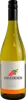
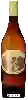
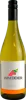
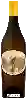
The Winery Wieninger of Wien of Weinland
Winery Wieninger
The winery offers 65 different wines
3.8


Note - 1Note - 1Note - 1Note - 0.5Note - 0
Its wines get an average rating of 3.8.
It is ranked in the top 1 of the estates of Weinland.
It is located in Wien in the region of Weinland

The Winery Wieninger is one of the largest wineries in the world. It offers 65 wines for sale in of Wien to come and discover on site or to buy online.
Top Winery Wieninger wines

Looking for the best Winery Wieninger wines in Wien among all the wines in the region? Check out our tops of the best red, white or effervescent Winery Wieninger wines. Also find some food and wine pairings that may be suitable with the wines from this area. Learn more about the region and the Winery Wieninger wines with technical and enological descriptions.

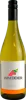
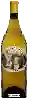
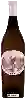
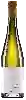
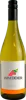
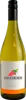
The top white wines of Winery Wieninger

Food and wine pairings with a white wine of Winery Wieninger

How Winery Wieninger wines pair with each other generally quite well with dishes of pork, rich fish (salmon, tuna etc) or shellfish such as recipes of stuffed eggplant (with vegetables or mixed), baked sea bream or shrimp with cream and fettuccine.
Organoleptic analysis of white wines of Winery Wieninger

On the nose the white wine of Winery Wieninger. often reveals types of flavors of pineapple, cream or grapefruit and sometimes also flavors of tropical, citrus or smoke. In the mouth the white wine of Winery Wieninger. is a with a nice freshness.
The best vintages in the white wines of Winery Wieninger

  • 2009With an average score of 4.40/5
  • 2008With an average score of 3.90/5
  • 2012With an average score of 3.88/5
  • 2013With an average score of 3.85/5
  • 2015With an average score of 3.82/5
  • 0With an average score of 3.81/5

The grape varieties most used in the white wines of Winery Wieninger.

  • Grüner Veltliner
  • Riesling
  • Weissburgunder
  • Chardonnay
  • Traminer
  • Neuburger

Discovering the wine region of Wien

Weinviertel DAC – whose name translates as "wine quarter" – is an appellation in Niederösterreich (Lower Austria). It is by far the largest Districtus Austriae Controllatus wine region in Austria. It was also the first Austrian wine region to be given that title, in 2002, with a DAC Reserve designation added in 2009. The designation applies only to white wines from the Grüner Veltliner Grape variety.

There are around 6700 hectares planted to the variety in this zone, just under half the total of Weinviertel Vineyards. It is also about half the national (and therefore global) total for the grape variety. - Minimum 12 percent Alcohol by Volume vs 13 percent - Maximum 6 grams per liter residual sugar vs completely dry - No Botrytis or oak aromas allowed vs subtle botrytis or oak aromas allowed - Submission to Tasting commision from January 1 of year after harvest vs from March 15 Weinviertel is Austria's most important wine region in terms of both its area under vine and the quantity of wine it produces. With more than 13,800 hectares (34,100 acres) planted, its Vineyard area is 10 times that of Austria's most famous region, Wachau, and about the same as the entire state of Burgenland.

Outside of the DAC title, the region also produces fresh, citrusy white wines made from Riesling, and increasing quantities of bright, spicy red Zweigelt. However, non-DAC wines are labeled with the Niederösterreich designation. Zweigelt holds a distant (but steadily closer) second place in the DAC, outnumbered four to one by Grüner Veltliner. Third equal are Welschriesling and Blauer Portugieser – both as traditional as they are unfashionable, and both declining rapidly as they are replaced with more internationally popular varieties such as Sauvignon Blanc and, particularly, Muscat.

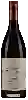
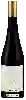
The top red wines of Winery Wieninger

Food and wine pairings with a red wine of Winery Wieninger

How Winery Wieninger wines pair with each other generally quite well with dishes of beef, veal or game (deer, venison) such as recipes of kamounia : tunisian beef stew, sauté of veal with chorizo or rabbit à la lorientaise.

Organoleptic analysis of red wines of Winery Wieninger

On the nose the red wine of Winery Wieninger. often reveals types of flavors of cherry, oaky or smoke and sometimes also flavors of minerality, strawberries or raspberry. In the mouth the red wine of Winery Wieninger. is a with a nice freshness.

The best vintages in the red wines of Winery Wieninger

  • 2008With an average score of 4.30/5
  • 2007With an average score of 4.10/5
  • 2017With an average score of 4.00/5
  • 0With an average score of 3.98/5
  • 2012With an average score of 3.97/5
  • 2009With an average score of 3.96/5

The grape varieties most used in the red wines of Winery Wieninger.

  • Merlot
  • Pinot Noir
  • Cabernet Sauvignon
  • Zweigelt
  • St. Laurent

Discover the grape variety: Chardonnay

The white Chardonnay is a grape variety that originated in France (Burgundy). It produces a variety of grape specially used for wine making. It is rare to find this grape to eat on our tables. This variety of grape is characterized by small bunches, and small grapes. White Chardonnay can be found in many vineyards: South West, Burgundy, Jura, Languedoc & Roussillon, Cognac, Bordeaux, Beaujolais, Savoie & Bugey, Loire Valley, Champagne, Rhone Valley, Armagnac, Lorraine, Alsace, Provence & Corsica.

The top sparkling wines of Winery Wieninger

Food and wine pairings with a sparkling wine of Winery Wieninger

How Winery Wieninger wines pair with each other generally quite well with dishes of lamb, veal or pork such as recipes of caramelized lamb mice, meatballs catalan style or chicken ballotine with ham and mushrooms.

Organoleptic analysis of sparkling wines of Winery Wieninger

On the nose the sparkling wine of Winery Wieninger. often reveals types of flavors of tree fruit, citrus fruit or red fruit.

The best vintages in the sparkling wines of Winery Wieninger

  • 0With an average score of 3.70/5

The grape varieties most used in the sparkling wines of Winery Wieninger.

  • Pinot Noir
  • Zweigelt

The word of the wine: Varietal wine

Name given to the local wine (IGP), produced from a single grape variety that gives the wine its characteristics of structure and aroma. The Languedoc is the leading producer of this type of wine, from most of the major French grape varieties.

The top pink wines of Winery Wieninger

Food and wine pairings with a pink wine of Winery Wieninger

How Winery Wieninger wines pair with each other generally quite well with dishes of beef, lamb or pork such as recipes of beef fashion, trapper's barbecue or vegetable planter.

The best vintages in the pink wines of Winery Wieninger

  • 0With an average score of 3.40/5
  • 2014With an average score of 3.00/5

The grape varieties most used in the pink wines of Winery Wieninger.

  • Cabernet Sauvignon
  • Merlot
  • Zweigelt

Discover the grape variety: Pinot noir

Pinot noir is an important red grape variety in Burgundy and Champagne, and its reputation is well known! Great wines such as the Domaine de la Romanée Conti elaborate their wines from this famous grape variety, and make it a great variety. When properly vinified, pinot noit produces red wines of great finesse, with a wide range of aromas depending on its advancement (fruit, undergrowth, leather). it is also the only red grape variety authorized in Alsace. Pinot Noir is not easily cultivated beyond our borders, although it has enjoyed some success in Oregon, the United States, Australia and New Zealand.

Discover other wineries and winemakers neighboring the Winery Wieninger

Planning a wine route in the of Wien? Here are the wineries to visit and the winemakers to meet during your trip in search of wines similar to Winery Wieninger.

Discover the grape variety: Sylvaner

The sylvaner is grown mainly in Germany and Alsace. The buds are somewhat cottony and the young leaves are green. The same applies to the ribbed branches. Once mature, the dominant colour is golden-green and small elliptical berries with small to medium-sized bunches can be seen. The ripe fruit is then adorned by five-lobed leaves. This variety is susceptible to chlorosis, gray mold, powdery mildew and mildew. It is also sensitive to frost and wind because of its long branches. It can be grown in any kind of soil, although it prefers stony, sandy and light soils. It is indeed moderately acidic and offers a complex set of aromas such as bitter almond, fruity and floral background. The taste has an excellent mixture of honey and candied or dried fruits.

Discover other regions and appellation of Weinland