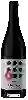
Winery WeningerSyrah
 Red wine



This wine generally goes well with beef, lamb or mature and hard cheese.
The Syrah of the Winery Weninger is in the top 50 of wines of Sopron.
Wine flavors and olphactive analysis




On the nose the Syrah of Winery Weninger in the region of Sopron often reveals types of flavors of non oak, earth or oak and sometimes also flavors of spices, red fruit or black fruit.
Food and wine pairings with Syrah
Pairings that work perfectly with Syrah



Original food and wine pairings with Syrah

The Syrah of Winery Weninger matches generally quite well with dishes of beef, lamb or spicy food such as recipes of polish goulash, purple leg of lamb with red wine and cranberries or coconut chicken curry in thermomix.
Details and technical informations about Winery Weninger's Syrah.
Discover the grape variety: Sercial
Portuguese, an ancient grape variety cultivated in particular in the Minho region and on the island of Madeira. It should not be confused with the cerceal branco and cerceal du Dâo, which are also related to the ramisco, trincadeira from Alentejo, alvarelhâo from Douro, etc. The Sercial can be found in Portugal, Spain, Italy, Bulgaria, Ukraine, Crimea, Russia, Argentina, South Africa, ... little known in France.
Last vintages of this wine
The best vintages of Syrah from Winery Weninger are 2015, 2010, 2009, 2017 and 2018.
Informations about the Winery Weninger
The Winery Weninger is one of of the world's great estates. It offers 74 wines for sale in the of Sopron to come and discover on site or to buy online.

The wine region of Sopron
The wine region of Sopron of Hungary. Wineries and vineyards like the Domaine Weninger or the Domaine Weninger produce mainly wines red, white and pink. The most planted grape varieties in the region of Sopron are Merlot, Zweigelt and Cabernet-Sauvignon, they are then used in wines in blends or as a single variety. On the nose of Sopron often reveals types of flavors of cherry, smoke or oak and sometimes also flavors of tree fruit, spices or citrus fruit.
The word of the wine: Local wine
Table wine, but with the origin indicated. It corresponds to a particular legislation: the freedom to use grape varieties is greater than for the AOC, but the quality criteria such as the approval tastings can sometimes be more demanding. The legislation is still evolving, but for the moment there are three levels: regional (e.g. Vin de Pays d'Oc), departmental and local (e.g. Côtes de Thongue).