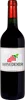
Weingut HagnBlauer Zweigelt Classic
 Red wine



In the mouth this red wine is a powerful with a nice balance between acidity and tannins.
This wine generally goes well with beef, game (deer, venison) or lamb.
Taste structure of the Blauer Zweigelt Classic from the Weingut Hagn
Light | Bold | |
Smooth | Tannic | |
Dry | Sweet | |
Soft | Acidic |
In the mouth the Blauer Zweigelt Classic of Weingut Hagn in the region of Weinland is a powerful with a nice balance between acidity and tannins.
Food and wine pairings with Blauer Zweigelt Classic
Pairings that work perfectly with Blauer Zweigelt Classic



Original food and wine pairings with Blauer Zweigelt Classic
The Blauer Zweigelt Classic of Weingut Hagn matches generally quite well with dishes of beef, lamb or game (deer, venison) such as recipes of beef tongue with pickle sauce, lamb shoulder confit or watercress salad with vitamins.
Details and technical informations about Weingut Hagn's Blauer Zweigelt Classic.
Discover the grape variety: Zweigelt
Intraspecific crossing between the saint laurent and the limberger realized in 1922 and in Austria by Fritz Zweigelt (1888/1964) who named it rotburger. Very well known in Austria, it can be found in most Eastern countries, Japan, Germany, Great Britain, the Netherlands, Belgium, Switzerland, Italy, Canada, the United States, etc. In France, it is not very well known and yet this variety has interesting qualities when vinified as a single variety for both red and rosé wines. - Synonyms: rotburger, klosterneuburger, zweigelt blau, blauer-zweigelt in Germany, zweigeltrebe in Austria, Great Britain and the Czech Republic, blauer zwelgetrabe in Hungary, etc. (for all the synonyms of the grape varieties, click here !)
Last vintages of this wine
The best vintages of Blauer Zweigelt Classic from Weingut Hagn are 2017, 2015, 2012, 2014 and 0.
Informations about the Weingut Hagn
The Weingut Hagn is one of of the world's great estates. It offers 34 wines for sale in the of Niederösterreich to come and discover on site or to buy online.

The wine region of Niederösterreich
Niederösterreich, or Lower Austria, is a wine region in the Northeast of Austria bordering Slovakia and the Czech Republic. It is the country's largest wine region, both geographically and in terms of production. There are around 28,000 hectares (69,000 acres) of vineyards. These are responsible for roughly half of Austria's total wine output.
The wine region of Weinland
Weinviertel DAC – whose name translates as "wine quarter" – is an appellation in Niederösterreich (Lower Austria). It is by far the largest Districtus Austriae Controllatus wine region in Austria. It was also the first Austrian wine region to be given that title, in 2002, with a DAC Reserve designation added in 2009. The designation applies only to white wines from the Grüner Veltliner Grape variety.
The word of the wine: Disgorging (champagne)
This is the evacuation of the deposit formed by the yeasts during the second fermentation in the bottle, by opening the bottle. The missing volume is completed with the liqueur de dosage - a mixture of wine and cane sugar - before the final cork is placed. For some years now, some producers have been replacing this sugar with rectified concentrated musts (concentrated grape juice) which give excellent results. A too recent dosage (less than three months) harms the gustatory harmony of the champagne.