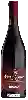
Winery Vinchio - Vaglio SerraI Tre Vescovi Barbera d'Asti Superiore
 Red wine



In the mouth this red wine is a powerful with a nice freshness.
This wine generally goes well with pork, poultry or veal.
Taste structure of the I Tre Vescovi Barbera d'Asti Superiore from the Winery Vinchio - Vaglio Serra
Light | Bold | |
Smooth | Tannic | |
Dry | Sweet | |
Soft | Acidic |
In the mouth the I Tre Vescovi Barbera d'Asti Superiore of Winery Vinchio - Vaglio Serra in the region of Piedmont is a powerful with a nice freshness.
Wine flavors and olphactive analysis






On the nose the I Tre Vescovi Barbera d'Asti Superiore of Winery Vinchio - Vaglio Serra in the region of Piedmont often reveals types of flavors of cherry, oaky or earthy and sometimes also flavors of blackberry, minerality or red fruit.
Food and wine pairings with I Tre Vescovi Barbera d'Asti Superiore
Pairings that work perfectly with I Tre Vescovi Barbera d'Asti Superiore



Original food and wine pairings with I Tre Vescovi Barbera d'Asti Superiore


The I Tre Vescovi Barbera d'Asti Superiore of Winery Vinchio - Vaglio Serra matches generally quite well with dishes of pasta, veal or pork such as recipes of pasta with pistou, rabbit with hunter's sauce or summer orecchiette.
Details and technical informations about Winery Vinchio - Vaglio Serra's I Tre Vescovi Barbera d'Asti Superiore.
Discover the grape variety: Carmenère
Carménère is a grape variety of Bordeaux origin. It is the result of a cross between Cabernet Franc and Gros Cabernet. In France, it occupies only about ten hectares, but it is also grown in Chile, Peru, the Andes, California, Italy and Argentina. The leaves of the carmenere are shiny and revolute. Its berries are round and medium-sized. Carménère is susceptible to grey rot, especially in wet autumn. It can also be exposed to the risk of climatic coulure, which is why it is important to grow it on poor soil and in warm areas. Carménère is associated with an average second ripening period. This variety has only one approved clone, 1059. It can be vinified with Cabernet Sauvignon and Merlot. It produces a rich, highly coloured wine, which acquires character when combined with other grape varieties.
Last vintages of this wine
The best vintages of I Tre Vescovi Barbera d'Asti Superiore from Winery Vinchio - Vaglio Serra are 2018, 2017, 2015, 2013 and 2009.
Informations about the Winery Vinchio - Vaglio Serra
The Winery Vinchio - Vaglio Serra is one of of the world's great estates. It offers 81 wines for sale in the of Barbera d'Asti to come and discover on site or to buy online.

The wine region of Barbera d'Asti
The wine region of Barbera d'Asti is located in the region of Piémont of Italy. Wineries and vineyards like the Domaine Coppo or the Domaine Luigi Spertino produce mainly wines red. On the nose of Barbera d'Asti often reveals types of flavors of cream, dark fruit or cassis and sometimes also flavors of caramel, raisin or stone. In the mouth of Barbera d'Asti is a powerful with a nice freshness.
The wine region of Piedmont
Piedmont (Piemonte) holds an unrivalled place among the world's finest wine regions. Located in northwestern Italy, it is home to more DOCG wines than any other Italian region, including such well-known and respected names as Barolo, Barbaresco and Barbera d'Asti. Though famous for its Austere, Tannic, Floral">floral reds made from Nebbiolo, Piedmont's biggest success story in the past decade has been Moscato d'Asti, a Sweet, Sparkling white wine. Piedmont Lies, as its name suggests, at the foot of the Western Alps, which encircle its northern and western sides and form its naturally formidable border with Provence, France.
The word of the wine: Disgorging (champagne)
This is the evacuation of the deposit formed by the yeasts during the second fermentation in the bottle, by opening the bottle. The missing volume is completed with the liqueur de dosage - a mixture of wine and cane sugar - before the final cork is placed. For some years now, some producers have been replacing this sugar with rectified concentrated musts (concentrated grape juice) which give excellent results. A too recent dosage (less than three months) harms the gustatory harmony of the champagne.