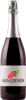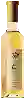
Winery Toro de PiedraLate Harvest Reserve Sauvignon Blanc - Sémillon
 Sweet wine


This wine generally goes well with vegetarian, poultry or rich fish (salmon, tuna etc).
Food and wine pairings with Late Harvest Reserve Sauvignon Blanc - Sémillon
Pairings that work perfectly with Late Harvest Reserve Sauvignon Blanc - Sémillon



Original food and wine pairings with Late Harvest Reserve Sauvignon Blanc - Sémillon


The Late Harvest Reserve Sauvignon Blanc - Sémillon of Winery Toro de Piedra matches generally quite well with dishes of rich fish (salmon, tuna etc), shellfish or sweet desserts such as recipes of sardines with escabeche, marmite dieppoise or very simple muffins.
Details and technical informations about Winery Toro de Piedra's Late Harvest Reserve Sauvignon Blanc - Sémillon.
Discover the grape variety: Herbemont
The origin of this American interspecific hybrid of the southern Vitis Aestivalis group, also called Vitis Bourquiniana, is not known for certain. In South Carolina (United States), it was propagated in the early 1800s by a Frenchman, Nicholas Herbemont (1771-1839), who found his first origins in Champagne. In France, it is one of six hybrids prohibited since 1935 (included in European regulations): Clinton, Herbemont, Isabelle, Jacquez, Noah and Othello. The Herbemont is very similar to the Jacquez - also called black spanish or lenoir - and has practically disappeared in favour of the latter.
Last vintages of this wine
The best vintages of Late Harvest Reserve Sauvignon Blanc - Sémillon from Winery Toro de Piedra are 2010, 2012, 2013, 0
Informations about the Winery Toro de Piedra
The Winery Toro de Piedra is one of of the world's great estates. It offers 19 wines for sale in the of Curico Valley to come and discover on site or to buy online.

The wine region of Curico Valley
Curicó Valley is a wine-producing region in CentralChile, located roughly 115 miles (185km) South of the Chilean capital, Santiago. It is divided into two sub-regions: Teno in the North and Lontue Valley in the south. The Curicó is known for its reliable, good value everyday wines, Particularly the reds made from Cabernet Sauvignon and whites from Sauvignon Blanc and Chardonnay. Curicó's vineyards are planted with more varieties than anywhere else in Chile.
The wine region of Central Valley
The Central Valley (El Valle Central) of Chile is one of the most important wine-producing areas in South America in terms of Volume. It is also one of the largest wine regions, stretching from the Maipo Valley (just south of Santiago) to the southern end of the Maule Valley. This is a distance of almost 250 miles (400km) and covers a number of Climate types. The Central Valley wine region is easily (and often) confused with the geological Central Valley, which runs north–south for more than 620 miles (1000km) between the Pacific Coastal Ranges and the lower Andes.
The word of the wine: Tired
Wine that is too old, faded or has suffered from handling such as racking or bottling. In the first case it is too late, in the second case the wine must be put to rest for a few weeks in the cellar.