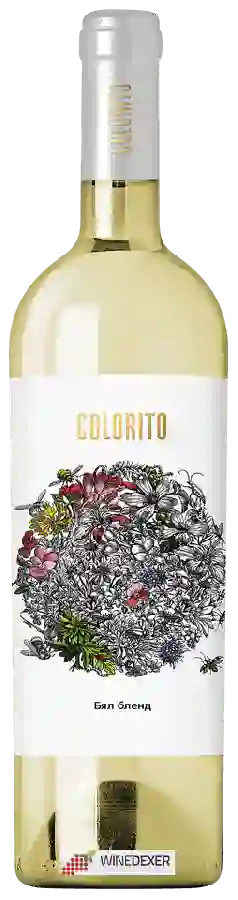
Winery SeeWinesColorito White Blend
 White wine


This wine generally goes well with pork, vegetarian or poultry.

Wine flavors and olphactive analysis




On the nose the Colorito White Blend of Winery SeeWines in the region of Black Sea often reveals types of flavors of citrus fruit, tropical fruit.
Food and wine pairings with Colorito White Blend
Pairings that work perfectly with Colorito White Blend



Original food and wine pairings with Colorito White Blend


The Colorito White Blend of Winery SeeWines matches generally quite well with dishes of pork, rich fish (salmon, tuna etc) or shellfish such as recipes of rabbit stew the old fashioned way, salmon pizza or garlic shrimp.
Details and technical informations about Winery SeeWines's Colorito White Blend.
Discover the grape variety: Chardonnay
Whites with many faces: mineral and taut at Chablis (lemon, green apple, flint), opulent and buttery at Meursault and Puligny-Montrachet (hazelnut, brioche, yellow fruits), tense and chalky in Champagne (Blanc de Blancs). Also vinified sparkling and widely exported (Sonoma, Margaret River, Casablanca). A Burgundian variety, a cross of Pinot Noir × Gouais Blanc, half-sibling of Aligoté.
Last vintages of this wine

The best vintages of Colorito White Blend from Winery SeeWines are 2018, 0
Informations about the Winery SeeWines
The Winery SeeWines is one of of the world's greatest estates. It offers 7 wines for sale in the of Black Sea to come and discover on site or to buy online.

The wine region of Black Sea
Vast transnational zone around the Black Sea (Bulgaria, Romania, Russia, Ukraine, Georgia, Turkey), one of the world's cradles of wine (6,000 years). Signature Saperavi in dense, deep red with signature notes of black cherry, blackberry, plum, ink, leather and a spicy touch, firm tannins. Structured Bulgarian Mavrud, supple Ukrainian Odesa Black. Rkatsiteli in taut white (green apple, citrus, mineral).
The word of the wine: Concentrator
A device that removes water from grape must by reverse osmosis or entropy system. Its proponents say that it is better to remove water than to add sugar to produce more alcohol. The improperly used concentrator can also exaggerate bad tastes or greenness of tannins.