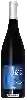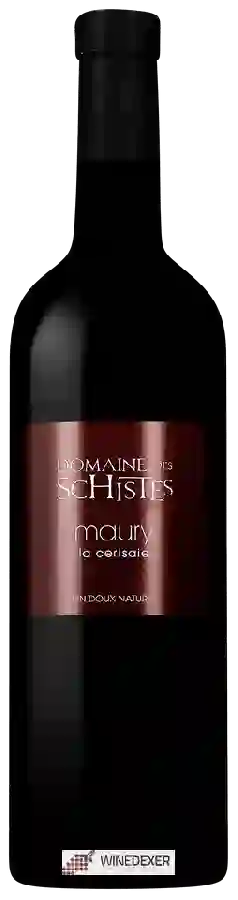
Domaine des SchistesLa Cerisaie Maury
 Natural sweet wine


This wine generally goes well with blue cheese, beef or mature and hard cheese.

Wine flavors and olphactive analysis


On the nose the La Cerisaie Maury of Domaine des Schistes in the region of Languedoc-Roussillon often reveals types of flavors of cherry, chocolate or cassis and sometimes also flavors of earth, oak or red fruit.
Food and wine pairings with La Cerisaie Maury
Pairings that work perfectly with La Cerisaie Maury



Original food and wine pairings with La Cerisaie Maury

The La Cerisaie Maury of Domaine des Schistes matches generally quite well with dishes of mature and hard cheese, blue cheese or aperitif such as recipes of casserole egg with saint-nectaire cheese, gnocchi with gorgonzola and mushrooms or happy new year bites.
Details and technical informations about Domaine des Schistes's La Cerisaie Maury.
Discover the grape variety: Grenache noir
Supple, sunny reds with a light robe and generous alcohol, with aromas of candied red fruits (strawberry, raspberry, cherry), garrigue, gentle spices, white pepper and kirsch notes. Ripe tannins and a warm palate. Pillar of GSM blends in the southern Rhône (Châteauneuf-du-Pape, Gigondas, Vacqueyras), star of Tavel rosé, Priorat and Aragonese Garnacha. Also in natural sweet wines (Banyuls, Maury, Rasteau). Historic Mediterranean variety from Aragon.
Last vintages of this wine

The best vintages of La Cerisaie Maury from Domaine des Schistes are 2017, 2020, 2023, 2018 and 2014.
Informations about the Domaine des Schistes
The Domaine des Schistes is one of of the world's greatest estates. It offers 24 wines for sale in the of Maury to come and discover on site or to buy online.

The wine region of Maury
Roussillon AOC specialising in fortified vins doux naturels (spirit-fortified), Agly valley on black schist. Signature Grenache Noir (75% min): powerful, sun-drenched sweet reds with notes of candied black cherry, blackberry, kirsch, cocoa, coffee, garrigue, dried fig and a balsamic touch, unctuous palate and long finish — from young fruity Grenat to oxidative rancio Tuilé. Also dense Maury Sec red. Perfect pairing with chocolate desserts.
The wine region of Languedoc-Roussillon
Largest single French vineyard, dominated by sunny, generous reds. Spicy Syrah, candied Grenache (ripe fruit, garrigue), structured Carignan, deep Mourvèdre, supple Cinsault. Stars: structured Corbières, Minervois, Faugères, Saint-Chinian; round Côtes-du-Roussillon. Legendary vins doux naturels: Banyuls and Maury (fortified Grenache) with notes of cocoa, fig, prune.
The word of the wine: Alcoholic fermentation
Transformation of sugars into alcohol under the effect of yeast. These yeasts exist in their natural state in the vineyards and in the cellars. Artificial seeding with selected yeasts is however very often practiced.