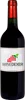
Winery SchalesCardinalis Spätburgunder
 Red wine


In the mouth this red wine is a with a nice freshness.
This wine generally goes well with poultry, beef or veal.

Taste structure of the Cardinalis Spätburgunder from the Winery Schales
Light | Bold | |
Smooth | Tannic | |
Dry | Sweet | |
Soft | Acidic |
In the mouth the Cardinalis Spätburgunder of Winery Schales in the region of Rheinhessen is a with a nice freshness.
Food and wine pairings with Cardinalis Spätburgunder
Pairings that work perfectly with Cardinalis Spätburgunder



Original food and wine pairings with Cardinalis Spätburgunder

The Cardinalis Spätburgunder of Winery Schales matches generally quite well with dishes of beef, veal or game (deer, venison) such as recipes of beef luc lake, chicken in sauce or stuffed rabbit in the oven.
Details and technical informations about Winery Schales's Cardinalis Spätburgunder.
Discover the grape variety: Carignan Gris
Lively, aromatic dry whites and pale rosés with a golden-to-salmon colour and a crisp, elegant palate; signature aromas of yellow fruits (peach, apricot), citrus, white flowers and Mediterranean notes. Original Mediterranean profile. Increasingly prized by Roussillon winemakers for small-batch, atypical cuvées. A grey-skinned mutation of Carignan, grown in small quantities in Languedoc-Roussillon, France.
Last vintages of this wine
The best vintages of Cardinalis Spätburgunder from Winery Schales are 0
Informations about the Winery Schales
The Winery Schales is one of of the world's greatest estates. It offers 70 wines for sale in the of Rheinhessen to come and discover on site or to buy online.

The wine region of Rheinhessen
71% white region: Riesling is king (5,000 ha), dry to off-dry, ripe yellow fruit, apple, citrus and fine saline minerality. Supple, floral Müller-Thurgau for everyday, the world's largest Silvaner plantation with herbaceous, straight notes. Historic cradle of off-sweet Liebfraumilch. Some supple reds (Dornfelder, Spätburgunder).
The word of the wine: Maturation
Transformation undergone by the grape when it is enriched with sugar and loses some of its acidity to reach maturity.