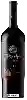
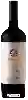
The Winery Rucahue Family Vineyard of Maule Valley of Central Valley
The Winery Rucahue Family Vineyard is one of the largest wineries in the world. It offers 37 wines for sale in of Maule Valley to come and discover on site or to buy online.
Looking for the best Winery Rucahue Family Vineyard wines in Maule Valley among all the wines in the region? Check out our tops of the best red, white or effervescent Winery Rucahue Family Vineyard wines. Also find some food and wine pairings that may be suitable with the wines from this area. Learn more about the region and the Winery Rucahue Family Vineyard wines with technical and enological descriptions.
How Winery Rucahue Family Vineyard wines pair with each other generally quite well with dishes of veal, pork or game (deer, venison) such as recipes of sliced endives with ham, home-made coq au vin or leg of wild boar.
Maule Valley is the largest wine-producing region in Chile other than the Central Valley, of which it is a Part. It has 75,000 acres (30,000ha) under Vine, and has traditionally been associated with quantity rather than quality. But this is rapidly changing – the bulk-producing Pais vine is gradually being replaced with more international varieties such as Cabernet Sauvignon and Carmenère, and careful winemaking practices are being employed to make some world-class red wines from old-vine Carignan.
The Central Valley itself runs between the Andes and the Coastal Mountains from the Chilean capital of Santiago in the North to the up-and-coming region of Bío Bío in the South.
The Maule Valley stretches for around 60 miles (100km), and the Center of its wine production Lies 180 miles (290km) south of Santiago at a latitude of 35°S. Maule is further south than the Central Valley's star regions of Maipo and Colchagua. The large amount of land covered by the Maule Valley DO (Denominación de Origen) means there is a multitude of terroirs, from low-lying river valleys to Andean hillsides.
Maule Valley was one of the first areas in Chile to be planted to vine, and its viticultural history stretches back to the start of colonisation by the Spanish.
The region has Long been one of Chile's most successful bulk-production wine districts, as evidenced by the large amount of Pais still found planted here. It has only been in the past 20 years that Maule vignerons have made a move toward quality, pioneered by the Kendall-Jackson empire of California, which set up a winery here in the mid-1990s.
Despite this push toward modernity, some of Maule's better throwbacks have survived – the region is fast becoming known for some 70-year-old Carignan vines that are being used to produce Soft, earthy red wines with Richplum and black-fruit characters.
One of the more southern of Chile's wine-growing areas, Maule is slightly cooler than its northerly cousins and has higher annual rainfall, most of which occurs during winter.
How Winery Rucahue Family Vineyard wines pair with each other generally quite well with dishes of beef, lamb or game (deer, venison) such as recipes of express veal stew in a pressure cooker, couscous of meat and fish or duck baeckeoffe with christmas spices and dried fruits.
On the nose the red wine of Winery Rucahue Family Vineyard. often reveals types of flavors of black fruit, oak or red fruit and sometimes also flavors of spices. In the mouth the red wine of Winery Rucahue Family Vineyard. is a powerful with a nice freshness.
Cabernet Franc is one of the oldest red grape varieties in Bordeaux. The Libourne region is its terroir where it develops best. The terroirs of Saint-Emilion and Fronsac allow it to mature and develop its best range of aromas. It is also the majority in many blends. The very famous Château Cheval Blanc, for example, uses 60% Cabernet Franc. The wines produced with Cabernet Franc are medium in colour with fine tannins and subtle aromas of small red fruits and spices. When blended with Merlot and Cabernet Sauvignon, it brings complexity and a bouquet of aromas to the wine. It produces fruity wines that can be drunk quite quickly, but whose great vintages can be kept for a long time. It is an earlier grape variety than Cabernet Sauvignon, which means that it is planted as far north as the Loire Valley. In Anjou, it is also used to make sweet rosé wines. Cabernet Franc is now used in some twenty countries in Europe and throughout the world.
How Winery Rucahue Family Vineyard wines pair with each other generally quite well with dishes of spicy food or sweet desserts such as recipes of butter chicken or chicken makkhani (india) or king's cake with frangipane.
Woody part of the grape bunch to which the berries are attached.
How Winery Rucahue Family Vineyard wines pair with each other generally quite well with dishes of pork, rich fish (salmon, tuna etc) or vegetarian such as recipes of croziflette, tuna and cream cheese pie or salmon and goat cheese quiche.
In the mouth the white wine of Winery Rucahue Family Vineyard. is a powerful.
The white Chardonnay is a grape variety that originated in France (Burgundy). It produces a variety of grape specially used for wine making. It is rare to find this grape to eat on our tables. This variety of grape is characterized by small bunches, and small grapes. White Chardonnay can be found in many vineyards: South West, Burgundy, Jura, Languedoc & Roussillon, Cognac, Bordeaux, Beaujolais, Savoie & Bugey, Loire Valley, Champagne, Rhone Valley, Armagnac, Lorraine, Alsace, Provence & Corsica.
Planning a wine route in the of Maule Valley? Here are the wineries to visit and the winemakers to meet during your trip in search of wines similar to Winery Rucahue Family Vineyard.
Carménère is a grape variety of Bordeaux origin. It is the result of a cross between Cabernet Franc and Gros Cabernet. In France, it occupies only about ten hectares, but it is also grown in Chile, Peru, the Andes, California, Italy and Argentina. The leaves of the carmenere are shiny and revolute. Its berries are round and medium-sized. Carménère is susceptible to grey rot, especially in wet autumn. It can also be exposed to the risk of climatic coulure, which is why it is important to grow it on poor soil and in warm areas. Carménère is associated with an average second ripening period. This variety has only one approved clone, 1059. It can be vinified with Cabernet Sauvignon and Merlot. It produces a rich, highly coloured wine, which acquires character when combined with other grape varieties.