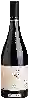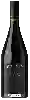
Winery Rucahue Family VineyardReserva Syrah
 Red wine



In the mouth this red wine is a powerful with a lot of tannins present in the mouth.
This wine generally goes well with poultry, beef or game (deer, venison).
Taste structure of the Reserva Syrah from the Winery Rucahue Family Vineyard
Light | Bold | |
Smooth | Tannic | |
Dry | Sweet | |
Soft | Acidic |
In the mouth the Reserva Syrah of Winery Rucahue Family Vineyard in the region of Central Valley is a powerful with a lot of tannins present in the mouth.
Wine flavors and olphactive analysis


On the nose the Reserva Syrah of Winery Rucahue Family Vineyard in the region of Central Valley often reveals types of flavors of spices, red fruit or black fruit.
Food and wine pairings with Reserva Syrah
Pairings that work perfectly with Reserva Syrah



Original food and wine pairings with Reserva Syrah

The Reserva Syrah of Winery Rucahue Family Vineyard matches generally quite well with dishes of beef, lamb or game (deer, venison) such as recipes of family potluck, pumpkin parmentier hash or boar in civet.
Details and technical informations about Winery Rucahue Family Vineyard's Reserva Syrah.
Discover the grape variety: Phoenix
Interspecific cross between the white bacchus and the white Villard obtained in 1964 by Gerhardt Erich Alleweldt (1927/2005) at the Geilweilerhof Station in Siebeldingen, Germany. It should be noted that the sirius and the staufer were also born from these same parents. Phoenix is little known even in France, although it is registered in the Official Catalogue of varieties of table grapes on the A2 list.
Last vintages of this wine
The best vintages of Reserva Syrah from Winery Rucahue Family Vineyard are 2015, 2013, 2012, 0 and 2011.
Informations about the Winery Rucahue Family Vineyard
The Winery Rucahue Family Vineyard is one of of the world's greatest estates. It offers 24 wines for sale in the of Maule Valley to come and discover on site or to buy online.

The wine region of Maule Valley
Maule Valley is the largest wine-producing region in Chile other than the Central Valley, of which it is a Part. It has 75,000 acres (30,000ha) under Vine, and has traditionally been associated with quantity rather than quality. But this is rapidly changing – the bulk-producing Pais vine is gradually being replaced with more international varieties such as Cabernet Sauvignon and Carmenère, and careful winemaking practices are being employed to make some world-class red wines from old-vine Carignan. The Central Valley itself runs between the Andes and the Coastal Mountains from the Chilean capital of Santiago in the North to the up-and-coming region of Bío Bío in the South.
The wine region of Central Valley
The Central Valley (El Valle Central) of Chile is one of the most important wine-producing areas in South America in terms of Volume. It is also one of the largest wine regions, stretching from the Maipo Valley (just south of Santiago) to the southern end of the Maule Valley. This is a distance of almost 250 miles (400km) and covers a number of Climate types. The Central Valley wine region is easily (and often) confused with the geological Central Valley, which runs north–south for more than 620 miles (1000km) between the Pacific Coastal Ranges and the lower Andes.
The word of the wine: Ugni blanc
White grape variety of Italian origin, and the main white variety grown in France. Its large bunches give fine, light and lively wines, suitable for distillation: today it is the main variety for making cognac and armagnac. Ugni blanc, which is a little richer in alcohol when grown in Mediterranean regions, is used in the blending of the Provence and Corsica appellations, often in association with other grape varieties that bring aromas and structure, such as clairette, grenache blanc or sauvignon. Ugni blanc is also used, on a secondary basis, in the production of certain white wines in Gironde (AOC Bordeaux, Entre-deux-Mers, etc.).