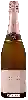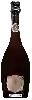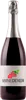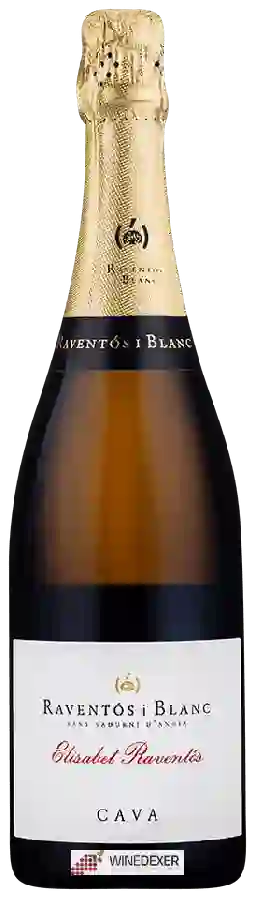
Winery Raventos I BlancElisabet Raventõs Cava
 Sparkling wine


This wine is a blend of 2 varietals which are the Parellada and the Xarello.
In the mouth this sparkling wine is a with a nice vivacity and a fine and pleasant bubble.
This wine generally goes well with appetizers and snacks, lean fish or shellfish.
Taste structure of the Elisabet Raventõs Cava from the Winery Raventos I Blanc
Light | Bold | |
Soft | Acidic | |
Gentle | Fizzy |
In the mouth the Elisabet Raventõs Cava of Winery Raventos I Blanc in the region of Cava is a with a nice vivacity and a fine and pleasant bubble.
Wine flavors and olphactive analysis

Food and wine pairings with Elisabet Raventõs Cava
Pairings that work perfectly with Elisabet Raventõs Cava



Original food and wine pairings with Elisabet Raventõs Cava


The Elisabet Raventõs Cava of Winery Raventos I Blanc matches generally quite well with dishes of shellfish, appetizers and snacks or lean fish such as recipes of arroz de marisco, beetroot and cream cheese verrines or sauerkraut of the sea in casserole.
Discover the grape variety: Parellada
The white Parellada is a grape variety that originated in France (Spain). It produces a variety of grape specially used for the elaboration of wine. It is rare to find this grape to eat on our tables. This variety of grape is characterized by large bunches of grapes of medium size. The white Parellada can be found cultivated in these vineyards: Languedoc & Roussillon, South West.
Last vintages of this wine

The best vintages of Elisabet Raventõs Cava from Winery Raventos I Blanc are 2006, 2005, 0, 2013
Informations about the Winery Raventos I Blanc
The Winery Raventos I Blanc is one of of the world's greatest estates. It offers 38 wines for sale in the of Cava to come and discover on site or to buy online.

The wine region of Cava
Cava is Spain's signature style of Sparkling wine, and the Iberian Peninsula's answer to Champagne. The traditional Grape varieties used in Cava were Macabeo, Parellada and Xarel-lo, but the Champagne varieties Chardonnay and Pinot Noir are also used. While the first Cava was produced exclusively in Catalonia - specifically in a small town called San Sadurní de Noya - modern Cava can be sourced from various regions of Spain. Aragon, Navarre, Rioja, Pais Vasco, Valencia and Extremadura have specific delimited areas that can benefit from the designation of origin.
The word of the wine: Deposit
Solid particles that can naturally coat the bottom of a bottle of wine. It is rather a guarantee that the wine has not been mistreated: in fact, to avoid the natural deposit, rather violent processes of filtration or cold passage (- 7 or - 8 °C) are used in order to precipitate the tartar (the small white crystals that some people confuse with crystallized sugar: just taste to dissuade you from it)