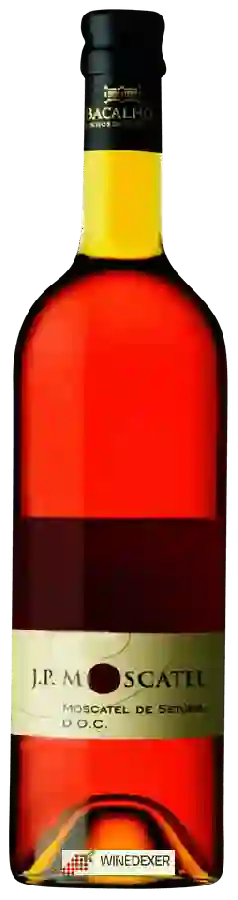
Winery JPMoscatel de Setúbal
 Natural sweet wine



In the mouth this natural sweet wine is a with a nice freshness.
This wine generally goes well with blue cheese and sweet desserts.
The Moscatel de Setúbal of the Winery JP is in the top 30 of wines of Setúbal.
Taste structure of the Moscatel de Setúbal from the Winery JP
Light | Bold | |
Dry | Sweet | |
Soft | Acidic |
In the mouth the Moscatel de Setúbal of Winery JP in the region of Península de Setúbal is a with a nice freshness.
Food and wine pairings with Moscatel de Setúbal
Pairings that work perfectly with Moscatel de Setúbal


Original food and wine pairings with Moscatel de Setúbal
The Moscatel de Setúbal of Winery JP matches generally quite well with dishes of sweet desserts or blue cheese such as recipes of chocolate mug cake or spinach and roquefort pie.
Details and technical informations about Winery JP's Moscatel de Setúbal.
Discover the grape variety: Peloursin
Peloursin is an ancient grape variety from the Grésivaudant Valley in Isère. Its bunches are of medium size. They are conical-cylindrical, compact and winged. The berries are rather large and covered with a thin bluish-black or rarely grey skin. The peloursin is now endangered. It only occupies half a hectare and is almost never propagated. This variety buds late. The grapes can be picked from the twentieth day after the chasselas harvest. Peloursin's bearing is somewhat sloping. This variety is very vigorous and can become very productive over the years as its stocks become larger and larger. However, it must be protected from black rot and grey rot, which it is particularly afraid of. The wine produced from Peloursin has a fairly good colour, astringent but still ordinary.
Last vintages of this wine
The best vintages of Moscatel de Setúbal from Winery JP are 2001, 0
Informations about the Winery JP
The Winery JP is one of of the world's greatest estates. It offers 16 wines for sale in the of Setúbal to come and discover on site or to buy online.

The wine region of Setúbal
The wine region of Setúbal is located in the region of Península de Setúbal of Portugal. Wineries and vineyards like the Domaine José Maria da Fonseca or the Domaine Horácio Simões produce mainly wines red, natural sweet and white. The most planted grape varieties in the region of Setúbal are Touriga nacional, Fernao Pires and Cabernet-Sauvignon, they are then used in wines in blends or as a single variety. On the nose of Setúbal often reveals types of flavors of orange, coffee or toasty and sometimes also flavors of clove, pear or lemon.
The wine region of Península de Setúbal
Setúbal Peninsula (also known as Península de Setúbal) is the Portuguese wine region immediately southeast of Lisbon, across the Tejo estuary. The Terroir in the area ranges from sandy coastal plains to the craggy, limestone-rich Serra Arribida hills. The area is known for its Dry red wines made from Castelão, and for its fortified wines and Sweet Moscatel de Setúbal. The wines produced here are made under three titles: two DOCs, Palmela and Setúbal, and one IGP.
The word of the wine: Ovoids (tanks)
Egg-shaped vats used for wine making and maturing that favour the natural suspension of the lees thanks to the vortex movements, which give the wine more fat and fruity aromas.