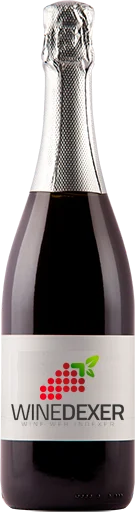
Winery PitarsCuvée Stella
 Sparkling wine



In the mouth this sparkling wine is a with a nice vivacity and a fine and pleasant bubble.
This wine generally goes well with vegetarian, appetizers and snacks or shellfish.
Taste structure of the Cuvée Stella from the Winery Pitars
Light | Bold | |
Soft | Acidic | |
Gentle | Fizzy |
In the mouth the Cuvée Stella of Winery Pitars in the region of Friuli-Venezia Giulia is a with a nice vivacity and a fine and pleasant bubble.
Food and wine pairings with Cuvée Stella
Pairings that work perfectly with Cuvée Stella



Original food and wine pairings with Cuvée Stella


The Cuvée Stella of Winery Pitars matches generally quite well with dishes of shellfish, vegetarian or appetizers and snacks such as recipes of mie goreng, goat cheese and bacon quiche or seaweed tartar.
Details and technical informations about Winery Pitars's Cuvée Stella.
Discover the grape variety: Regent
A complex interspecific cross between the diana (sylvaner x Müller-Thurgau) and the chambourcin obtained in Germany in 1967 by Gerhardt Alleweldt. It can be found in Quebec (Canada), Belgium and Switzerland, but is little known in France. It should be noted that Regent, a monogenic variety, which is nevertheless resistant to certain cryptogamic diseases, was "bypassed" in 2010 by a less resistant strain of mildew, which was also the case for bianca.
Last vintages of this wine
The best vintages of Cuvée Stella from Winery Pitars are 0
Informations about the Winery Pitars
The Winery Pitars is one of of the world's great estates. It offers 35 wines for sale in the of Friuli-Venezia Giulia to come and discover on site or to buy online.

The wine region of Friuli-Venezia Giulia
Friuli-Venezia Giulia is an autonomous region in Italy, located in the extreme Northeast of the country, bordered by Austria and Slovenia to the north and east respectively. The eponymous wine region has four DOCGs, twelve DOCs and three PGIs and is best known for its white wine production. 77% of the region's wines are white, one of the highest proportions of any Italian region. The region's wines are distinctly different from other Italian wines in that they are made from non-traditional Grape varieties such as Sauvignon blanc, Riesling and Pinot blanc, as well as typically Italian varieties such as pinot gris and picolit.
The word of the wine: Phenolic ripeness
A distinction is made between the ripeness of sugars and acids and the ripeness of tannins and other compounds such as anthocyanins and tannins, which will bring structure and colour. Grapes can be measured at 13° potential without having reached this phenolic maturity. Vinified at this stage, they will give hard, astringent wines, without charm.