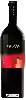
Winery Pago de MapinaceaRoble
 Red wine
In the mouth this red wine is a powerful.
This wine generally goes well with poultry, beef or veal.
Taste structure of the Roble from the Winery Pago de Mapinacea
Light | Bold | |
Smooth | Tannic | |
Dry | Sweet | |
Soft | Acidic |
In the mouth the Roble of Winery Pago de Mapinacea in the region of Castille-et-Léon is a powerful.
Food and wine pairings with Roble
Pairings that work perfectly with Roble



Original food and wine pairings with Roble

The Roble of Winery Pago de Mapinacea matches generally quite well with dishes of beef, pasta or veal such as recipes of baked marrow bones, pasta with zucchini or dafina.
Details and technical informations about Winery Pago de Mapinacea's Roble.
Discover the grape variety: Petit Bouschet
Crossbreeding carried out in 1829 by Louis Bouschet de Bernard (father of Henri Bouschet, also known for his numerous varieties) between the aramon and the teinturier. It was practically multiplied all over the world. Today, it is an extinct grape variety and can only be found in a few private or public collections and conservatories.
Informations about the Winery Pago de Mapinacea
The Winery Pago de Mapinacea is one of of the world's greatest estates. It offers 1 wines for sale in the of Toro to come and discover on site or to buy online.

The wine region of Toro
The wine region of Toro is located in the region of Castille-et-Léon of Spain. Wineries and vineyards like the Domaine Teso La Monja or the Domaine Teso La Monja produce mainly wines red, white and sweet. The most planted grape varieties in the region of Toro are Tempranillo, Verdejo and Pinot gris, they are then used in wines in blends or as a single variety. On the nose of Toro often reveals types of flavors of cherry, espresso or black olive and sometimes also flavors of menthol, bramble or cigar box.
The wine region of Castille-et-Léon
Located in the northern half of the Central Iberian plateau, Castilla y León is the largest of Spain's 17 administrative regions, covering about one-fifth of the country's total area. It extends about 350 kilometres (220 miles) from central Spain to the northern coast. Just as wide, it connects the Rioja wine region to the Portuguese border. Red wines reign supreme in Castilla y León, and the Tempranillo grape is undoubtedly the king.
The word of the wine: Olfaction
Perception of odours and aromas by the olfactory bulb. Retroolfaction is the same phenomenon inside the mouth via the retronasal route.