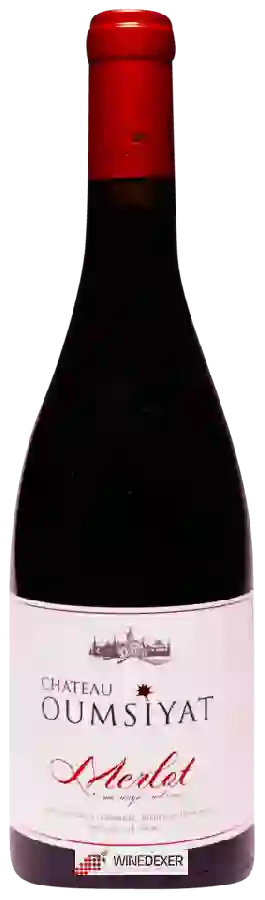
Winery OumsiyatMerlot
 Red wine



This wine generally goes well with beef and game (deer, venison).
The Merlot of the Winery Oumsiyat is in the top 60 of wines of Mount Lebanon.

Food and wine pairings with Merlot
Pairings that work perfectly with Merlot


Original food and wine pairings with Merlot
The Merlot of Winery Oumsiyat matches generally quite well with dishes of beef or game (deer, venison) such as recipes of tournedos with foie gras or duck breast with honey, potato and onion with garlic.
Details and technical informations about Winery Oumsiyat's Merlot.
Discover the grape variety: Merlot
Round and fleshy reds with a velvety texture, showing aromas of ripe plum, black cherry, cocoa and truffle notes with age. Supple tannins, generous alcohol, indulgent finish. Pillar of Libournais (Pomerol with Pétrus, Saint-Émilion with Cheval Blanc and Ausone) and signature of Super Tuscans, Italian Wales and Washington State. A cross of Cabernet Franc × Magdeleine Noire, France's most planted red variety.
Last vintages of this wine
The best vintages of Merlot from Winery Oumsiyat are 0
Informations about the Winery Oumsiyat
The Winery Oumsiyat is one of of the world's greatest estates. It offers 18 wines for sale in the of Mount Lebanon to come and discover on site or to buy online.

The wine region of Mount Lebanon
Lebanese coastal mountain range separating the Mediterranean from the Bekaa, vineyards at 800-1,700 m in terraces, high-altitude Mediterranean climate with wide temperature swings. Merwah and Obeidi indigenous signature whites (presumed ancestors of Chardonnay and Semillon): ample and complex with notes of citrus, white peach, dried fruit, flowers, honey and a limestone mineral touch — unique millennial identities. Dense Cabernet, Cinsault, Syrah reds. Sub-regions Batroun, Kesrouan, Metn.
The word of the wine: Phenolic ripeness
A distinction is made between the ripeness of sugars and acids and the ripeness of tannins and other compounds such as anthocyanins and tannins, which will bring structure and colour. Grapes can be measured at 13° potential without having reached this phenolic maturity. Vinified at this stage, they will give hard, astringent wines, without charm.