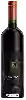
Winery Ômina RomanaPulzianum
 Red wine


In the mouth this red wine is a powerful.
This wine generally goes well with poultry, beef or veal.
Taste structure of the Pulzianum from the Winery Ômina Romana
Light | Bold | |
Smooth | Tannic | |
Dry | Sweet | |
Soft | Acidic |
In the mouth the Pulzianum of Winery Ômina Romana in the region of Lazio is a powerful.
Wine flavors and olphactive analysis


On the nose the Pulzianum of Winery Ômina Romana in the region of Lazio often reveals types of flavors of non oak, earth or oak and sometimes also flavors of red fruit.
Food and wine pairings with Pulzianum
Pairings that work perfectly with Pulzianum



Original food and wine pairings with Pulzianum

The Pulzianum of Winery Ômina Romana matches generally quite well with dishes of beef, pasta or veal such as recipes of sautéed pork with pineapple, pasta with avocado or breaded veal cutlets.
Details and technical informations about Winery Ômina Romana's Pulzianum.
Discover the grape variety: Ruby seedless
Cross between the emperor and the 75 Pirovano or sultana moscata obtained in 1939 in the United States by Professor Harold P. Olmo of the University of Davis (California). It can also be found in Australia. This variety should not be confused with the ruby-cabernet and the rubi which is a natural pink mutation of the italia.
Last vintages of this wine

The best vintages of Pulzianum from Winery Ômina Romana are 2013, 2014, 0
Informations about the Winery Ômina Romana
The Winery Ômina Romana is one of of the world's greatest estates. It offers 21 wines for sale in the of Lazio to come and discover on site or to buy online.

The wine region of Lazio
Lazio is a region in CentralItaly, where the ancient capital of Rome is located. The region's reputation is based primarily on its white wines, the main varieties of which are Trebbiano, Malvasia di Candia and Malvasia Puntinata. Traditionally, these wines were fat, Round, abboccato and intended for immediate consumption. Today, the styles are lighter, drier and crisper thanks to modern winemaking methods.
The word of the wine: Oenographer
Wine label collector. It is becoming increasingly difficult to obtain the labels of famous vintages, which thus seek to avoid forgeries.