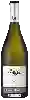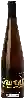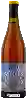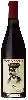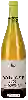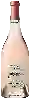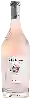
Winery Mas Belles EauxLanguedoc Rosé
 Pink wine



In the mouth this pink wine is a with a nice freshness.
This wine generally goes well with vegetarian, appetizers and snacks or lean fish.
Taste structure of the Languedoc Rosé from the Winery Mas Belles Eaux
Light | Bold | |
Dry | Sweet | |
Soft | Acidic |
In the mouth the Languedoc Rosé of Winery Mas Belles Eaux in the region of Languedoc-Roussillon is a with a nice freshness.
Food and wine pairings with Languedoc Rosé
Pairings that work perfectly with Languedoc Rosé



Original food and wine pairings with Languedoc Rosé


The Languedoc Rosé of Winery Mas Belles Eaux matches generally quite well with dishes of pasta, vegetarian or appetizers and snacks such as recipes of eggplant and zucchini lasagna, mushroom, bacon and gruyere quiche or palm trees for the aperitif!.
Details and technical informations about Winery Mas Belles Eaux's Languedoc Rosé.
Discover the grape variety: Reichensteiner
Intraspecific crossing between the müller-thurgau and a variety resulting from the crossing (madeleine angevine x calabre blanc) obtained in Germany in 1939 by Heinrich Birk (1898-1973). It can be found in France (Alsace, etc.), Great Britain, the Netherlands, Germany, Belgium, Switzerland, New Zealand, etc.
Informations about the Winery Mas Belles Eaux
The Winery Mas Belles Eaux is one of of the world's great estates. It offers 22 wines for sale in the of Languedoc to come and discover on site or to buy online.

The wine region of Languedoc
Languedoc (formerly Coteaux du Languedoc) is a key appellation used in the Languedoc-Roussillon wine region of southern France. It covers Dry table wines of all three colors (red, white and rosé) from the entire region, but leaves Sweet and Sparkling wines to other more specialized appellations. About 75% of all Languedoc wines are red, with the remaining 25% split roughly down the middle between whites and rosés. The appellation covers most of the Languedoc region and almost a third of all the vineyards in France.
The wine region of Languedoc-Roussillon
Languedoc (formerly Coteaux du Languedoc) is a key appellation used in the Languedoc-Roussillon wine region of southern France. It covers Dry table wines of all three colors (red, white and rosé) from the entire region, but leaves Sweet and Sparkling wines to other more specialized appellations. About 75% of all Languedoc wines are red, with the remaining 25% split roughly down the middle between whites and rosés. The appellation covers most of the Languedoc region and almost a third of all the vineyards in France.
The word of the wine: Green harvest or green harvesting
The practice of removing excess bunches of grapes from certain vines, usually in July, but sometimes later. This is often necessary, but not always a good thing, as the remaining grapes tend to gain weight.