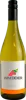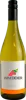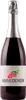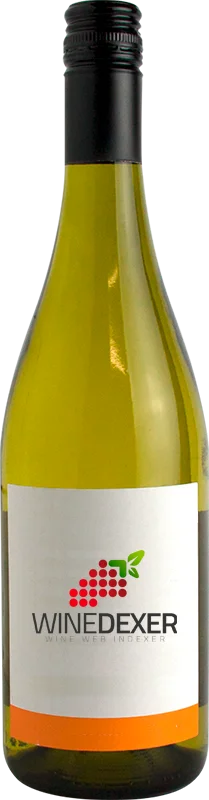
Winery Maria BortolottiMamolo Bianco
 White wine



In the mouth this white wine is a powerful with a nice freshness.
This wine generally goes well with lean fish, shellfish or mature and hard cheese.
Taste structure of the Mamolo Bianco from the Winery Maria Bortolotti
Light | Bold | |
Dry | Sweet | |
Soft | Acidic |
In the mouth the Mamolo Bianco of Winery Maria Bortolotti in the region of Emilia-Romagna is a powerful with a nice freshness.
Food and wine pairings with Mamolo Bianco
Pairings that work perfectly with Mamolo Bianco



Original food and wine pairings with Mamolo Bianco


The Mamolo Bianco of Winery Maria Bortolotti matches generally quite well with dishes of pasta, shellfish or mature and hard cheese such as recipes of pasta with vongoles (flat clams), seafood lasagna or cancoillotte (made from metton).
Details and technical informations about Winery Maria Bortolotti's Mamolo Bianco.
Discover the grape variety: Mayorquin
Mayorquin is one of the many white grape varieties. According to the studies undertaken, it comes from Spanish vineyards and its original name is planta fina de Pedralba. In France, it may also be called Plant de Marseille, but it has other names such as Tizigzaouine, Damas Blanc or Alicante, depending on the regions and areas where it is grown. Nowadays, this variety is grown on an area of almost 2 ha, regardless of its names. Mayorquin is considered a rare variety. It is in the process of disappearing and requires some multiplication and cultivation to continue to exist. In France, it is only found in Belley and is mainly used as a table grape, especially for desserts. However, it can also be vinified, although the result is not as appreciated as those of other grape varieties. Instead, people tend to use Mayorquin as a secondary grape variety to produce other more popular wines.
Last vintages of this wine
The best vintages of Mamolo Bianco from Winery Maria Bortolotti are 0, 2012
Informations about the Winery Maria Bortolotti
The Winery Maria Bortolotti is one of of the world's greatest estates. It offers 23 wines for sale in the of Emilia-Romagna to come and discover on site or to buy online.

The wine region of Emilia-Romagna
Romagna/emilia">Emilia-Romagna is a Rich and fertile region in Northern Italy, and one of the country's most prolific wine-producing regions, with over 58,000 hectares (143,320 acres) of vines in 2010. It is 240 kilometers (150 miles) wide and stretches across almost the entire northern Italian peninsula, sandwiched between Tuscany to the South, Lombardy and Veneto to the north and the Adriatic Sea to the east. Nine miles of Liguria is all that separates Emilia-Romagna from the Ligurian Sea, and its uniqueness as the only Italian region with both an east and west coast. Emilia-Romagna's wine-growing heritage dates back to the seventh century BC, making it one of the oldest wine-growing regions in Italy.
The word of the wine: Young
A very relative term that can designate a wine of the year that is already at its optimum, as well as a wine that has passed its first year but has not yet developed all its qualities.