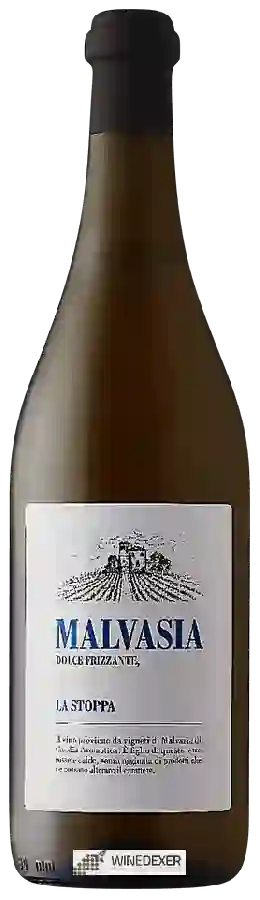
Winery La StoppaMalvasia Dolce Frizzante
 Sparkling wine


This wine generally goes well with
Wine flavors and olphactive analysis



On the nose the Malvasia Dolce Frizzante of Winery La Stoppa in the region of Emilia-Romagna often reveals types of flavors of earth, tree fruit or spices and sometimes also flavors of citrus fruit, floral or tropical fruit.
Details and technical informations about Winery La Stoppa's Malvasia Dolce Frizzante.
Discover the grape variety: Dorona
An autochthonous Italian grape variety that was cultivated for a very long time, particularly in the Venice region, where it almost disappeared. It seems to be known only in this region and therefore completely unknown in all other wine-producing countries. According to recently published A.D.N. analyses, it is the result of a natural intraspecific cross between Garganega and Tuscan malvasia or malvasia del chianti, which explains why it has long been confused with its mother, Garganega.
Last vintages of this wine

The best vintages of Malvasia Dolce Frizzante from Winery La Stoppa are 2018, 2017, 2015, 2016 and 2014.
Informations about the Winery La Stoppa
The Winery La Stoppa is one of of the world's greatest estates. It offers 20 wines for sale in the of Emilia-Romagna to come and discover on site or to buy online.

The wine region of Emilia-Romagna
Romagna/emilia">Emilia-Romagna is a Rich and fertile region in Northern Italy, and one of the country's most prolific wine-producing regions, with over 58,000 hectares (143,320 acres) of vines in 2010. It is 240 kilometers (150 miles) wide and stretches across almost the entire northern Italian peninsula, sandwiched between Tuscany to the South, Lombardy and Veneto to the north and the Adriatic Sea to the east. Nine miles of Liguria is all that separates Emilia-Romagna from the Ligurian Sea, and its uniqueness as the only Italian region with both an east and west coast. Emilia-Romagna's wine-growing heritage dates back to the seventh century BC, making it one of the oldest wine-growing regions in Italy.
The word of the wine: Drain
Stopper, originally made of wood, used to plug barrels and more generally all wooden containers used to store or mature wine.