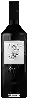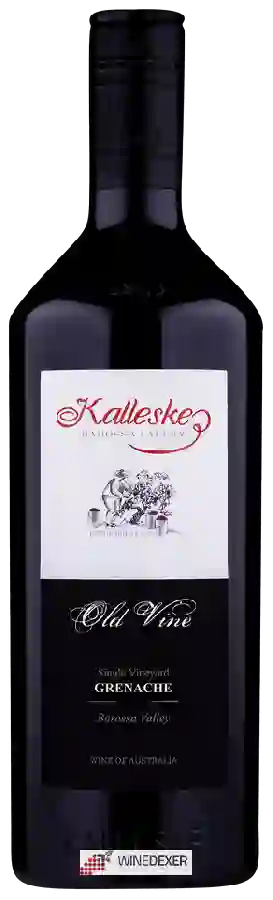
Winery KalleskeOld Vine Grenache
 Red wine


This wine generally goes well with beef and mature and hard cheese.
The Old Vine Grenache of the Winery Kalleske is in the top 70 of wines of Barossa.

Wine flavors and olphactive analysis






On the nose the Old Vine Grenache of Winery Kalleske in the region of Australie du Sud often reveals types of flavors of cherry, oaky or blackberry and sometimes also flavors of red fruit, tobacco or vanilla.
Food and wine pairings with Old Vine Grenache
Pairings that work perfectly with Old Vine Grenache


Original food and wine pairings with Old Vine Grenache
The Old Vine Grenache of Winery Kalleske matches generally quite well with dishes of beef or mature and hard cheese such as recipes of beef with onions chinese style or tomato basil cake.
Details and technical informations about Winery Kalleske's Old Vine Grenache.
Discover the grape variety: Albanella
Fresh and lively dry whites with a pale golden robe, a supple palate with preserved acidity, showing understated aromas of citrus, white flowers and Apennine herbaceous notes. Discreet profile best drunk young. Often blended with verdicchio or trebbiano in Marche whites, contributing to the typicity of Marchigian whites without dominating the terroir. Native white Italian grape from the Marche region, grown on small surfaces in the Apennines.
Last vintages of this wine

The best vintages of Old Vine Grenache from Winery Kalleske are 2010, 2008, 2007, 2004 and 2018.
Informations about the Winery Kalleske
The Winery Kalleske is one of of the world's greatest estates. It offers 25 wines for sale in the of Barossa to come and discover on site or to buy online.

The wine region of Barossa
World icon of Australian Shiraz (~50% of plantings). Powerful, sun-filled reds with signature notes of candied blackberry, black plum, dark chocolate, liquorice, leather and sweet spices (pepper, clove), round tannins and generous opulence. Old vines among the world's oldest (Shiraz from 1843, Turkey Flat). Also fruity, sun-filled Grenache, firm Mataro (Mourvèdre), dense Cabernet Sauvignon and ample Sémillon.
The wine region of Australie du Sud
Cradle of the great Australian Shiraz: powerful, sun-drenched reds with notes of blackberry, candied plum, pepper, chocolate and eucalyptus, ample tannins and vibrant fruit (Barossa, McLaren Vale). Firm, minty Cabernet Sauvignon on Coonawarra (terra rossa). Dry, lemony Riesling from Clare and Eden Valley, straight and taut. Fresh Sauvignon and Chardonnay from Adelaide Hills.
The word of the wine: Petite arvine
An ancient white grape variety from the Valais (Switzerland), which produces renowned wines suitable for ageing. Viney and sustained by a strong vivacity, these wines express a fine salty touch, the signature of this variety. Petite arvine wines can be dry, tender or made from withered grapes from late harvesting. Syn.: arvine.