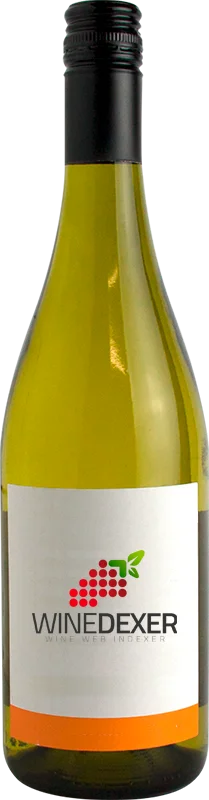
Winery Jerome GueneauSancerre
 White wine



In the mouth this white wine is a with a nice freshness.
This wine generally goes well with pork, vegetarian or shellfish.
Taste structure of the Sancerre from the Winery Jerome Gueneau
Light | Bold | |
Dry | Sweet | |
Soft | Acidic |
In the mouth the Sancerre of Winery Jerome Gueneau in the region of Loire Valley is a with a nice freshness.
Wine flavors and olphactive analysis



On the nose the Sancerre of Winery Jerome Gueneau in the region of Loire Valley often reveals types of flavors of citrus, apples or minerality and sometimes also flavors of pear, earth or vegetal.
Food and wine pairings with Sancerre
Pairings that work perfectly with Sancerre



Original food and wine pairings with Sancerre


The Sancerre of Winery Jerome Gueneau matches generally quite well with dishes of pork, shellfish or spicy food such as recipes of magic cake cheese quiche, pasta shells or butter chicken or chicken makkhani (india).
Details and technical informations about Winery Jerome Gueneau's Sancerre.
Discover the grape variety: Pascal
Pascal blanc is a grape variety that originated in France (Provence). It produces a variety of grape specially used for wine making. It is rare to find this grape to eat on our tables. Pascal blanc can be found in many vineyards: South-West, Cognac, Bordeaux, Provence & Corsica, Rhone valley, Loire valley, Savoie & Bugey, Beaujolais.
Last vintages of this wine
The best vintages of Sancerre from Winery Jerome Gueneau are 2017, 2013, 2015, 2014 and 2018.
Informations about the Winery Jerome Gueneau
The Winery Jerome Gueneau is one of of the world's greatest estates. It offers 6 wines for sale in the of Haute Loire to come and discover on site or to buy online.

The wine region of Haute Loire
Haute Loire is an unofficial name for the wine-producing communes of the Loire Valley located upstream (South and east) from Touraine. It includes two of the Loire's most famous appellations - Sancerre and Pouilly-Fume - along with a number of lesser known appellations such as Orléans, Valencay, Quincy and Côtes du Forez. The concept of a "Haute Loire" sub-region is necessary because the appellations that make it up are not grouped by an administrative or historical region; their main commonality is their proximity to the Loire River. Most other French wine regions correspond closely to an administrative region or department (e.
The wine region of Loire Valley
The Loire Valley is a key wine region in western France. It follows the course of the Loire River on its Long journey through the heart of France, from the inland hills of the Auvergne to the plains of the French Atlantic coast near Nantes (Muscadet country). Important in terms of quantity and quality, the region produces large quantities (about 4 million h/l each year) of everyday wines, as well as some of France's greatest wines. Diversity is another of the region's major assets; the styles of wine produced here range from the light, tangy Muscadet to the Sweet, honeyed Bonnezeaux, the Sparkling whites of Vouvray and the juicy, Tannic reds of Chinon and Saumur.
The word of the wine: Garrigue
Notes reminiscent of aromatic Mediterranean herbs such as thyme or rosemary, found in many southern wines.