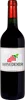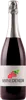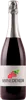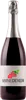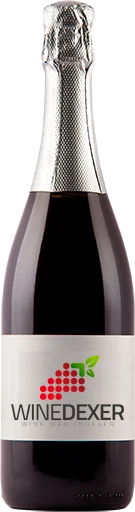
Winery ZoninLambrusco dell'Emilia Amabile Frizzante
 Sparkling wine


This wine generally goes well with pork, poultry or rich fish (salmon, tuna etc).
Food and wine pairings with Lambrusco dell'Emilia Amabile Frizzante
Pairings that work perfectly with Lambrusco dell'Emilia Amabile Frizzante



Original food and wine pairings with Lambrusco dell'Emilia Amabile Frizzante


The Lambrusco dell'Emilia Amabile Frizzante of Winery Zonin matches generally quite well with dishes of pork, rich fish (salmon, tuna etc) or mature and hard cheese such as recipes of country cabbage, papillotes of simple salmon steaks or beaufort pie.
Details and technical informations about Winery Zonin's Lambrusco dell'Emilia Amabile Frizzante.
Discover the grape variety: Verdejo
An ancient grape variety that has been cultivated for a long time, mainly in the Rueda region of northwestern Spain. D.N.A. tests show that it is the result of a natural cross between Savagnin and Castellana Blanco. It should not be confused with the Verdelho, which is very well known in Portugal, and the Verdelho Branco, which is almost more widespread. The Verdejo is registered in the Official Catalogue of wine grape varieties list A. It can also be found in the United States (Virginia, California, etc.), Australia, Portugal, etc., but is practically unknown in France.
Last vintages of this wine
The best vintages of Lambrusco dell'Emilia Amabile Frizzante from Winery Zonin are 0
Informations about the Winery Zonin
The Winery Zonin is one of wineries to follow in Emilia.. It offers 237 wines for sale in the of Emilia to come and discover on site or to buy online.

The wine region of Emilia
The wine region of Emilia is located in the region of Émilie-Romagne of Italy. We currently count 397 estates and châteaux in the of Emilia, producing 1004 different wines in conventional, organic and biodynamic agriculture. The wines of Emilia go well with generally quite well with dishes .
The wine region of Emilia-Romagna
Romagna/emilia">Emilia-Romagna is a Rich and fertile region in Northern Italy, and one of the country's most prolific wine-producing regions, with over 58,000 hectares (143,320 acres) of vines in 2010. It is 240 kilometers (150 miles) wide and stretches across almost the entire northern Italian peninsula, sandwiched between Tuscany to the South, Lombardy and Veneto to the north and the Adriatic Sea to the east. Nine miles of Liguria is all that separates Emilia-Romagna from the Ligurian Sea, and its uniqueness as the only Italian region with both an east and west coast. Emilia-Romagna's wine-growing heritage dates back to the seventh century BC, making it one of the oldest wine-growing regions in Italy.
The word of the wine: Muscat blanc à petits grains
A white grape variety cultivated since antiquity on the shores of the Mediterranean, it is considered the noblest of the muscats. It is mainly used to make sweet wines, often from mutage. In France, it is the sole variety used in many natural sweet wines: muscat-de-frontignan, muscat-de-mireval, muscat-de-lunel, muscat-de-saint-jean-de-minervois, muscat-de-beaumes-de-venise, muscat-du-cap-corse. Combined with Muscat d'Alexandrie, it gives Muscat-de-Rivesaltes. It is also used to make sparkling white wines (clairette-de-die; moscato d'asti and asti spumante in Italy) and dry wines (alsace-muscat). Powerfully aromatic and complex, its wines evoke fresh grapes, roses, exotic fruits, citrus fruits and spices.