The Winery Haselgrove of McLaren Vale of Australie du Sud
Winery Haselgrove
The winery offers 64 different wines
3.8


Note - 1Note - 1Note - 1Note - 0.5Note - 0
Its wines get an average rating of 3.8.
It is ranked in the top 11 of the estates of Australie du Sud.
It is located in McLaren Vale in the region of Australie du Sud

The Winery Haselgrove is one of the world's great estates. It offers 64 wines for sale in of McLaren Vale to come and discover on site or to buy online.
Top Winery Haselgrove wines

Looking for the best Winery Haselgrove wines in McLaren Vale among all the wines in the region? Check out our tops of the best red, white or effervescent Winery Haselgrove wines. Also find some food and wine pairings that may be suitable with the wines from this area. Learn more about the region and the Winery Haselgrove wines with technical and enological descriptions.

The top red wines of Winery Haselgrove

Food and wine pairings with a red wine of Winery Haselgrove

How Winery Haselgrove wines pair with each other generally quite well with dishes of beef, pasta or lamb such as recipes of braciola (southern italy), lasagne simplissimo or milk-fed lamb sautéed with saffron and lemon.

Organoleptic analysis of red wines of Winery Haselgrove

On the nose the red wine of Winery Haselgrove. often reveals types of flavors of black fruit, non oak or earth and sometimes also flavors of oak, spices or red fruit. In the mouth the red wine of Winery Haselgrove. is a powerful with a lot of tannins present in the mouth.

The best vintages in the red wines of Winery Haselgrove

  • 2012With an average score of 3.98/5
  • 2018With an average score of 3.90/5
  • 2014With an average score of 3.89/5
  • 2016With an average score of 3.88/5
  • 2017With an average score of 3.88/5
  • 2011With an average score of 3.88/5

The grape varieties most used in the red wines of Winery Haselgrove.

  • Shiraz/Syrah
  • Cabernet Sauvignon
  • Grenache
  • Mourvedre
  • Cabernet Franc
  • Merlot

Discovering the wine region of McLaren Vale

The wine region of McLaren Vale is located in the region of Fleurieu of Australie du Sud of Australia. We currently count 599 estates and châteaux in the of McLaren Vale, producing 2626 different wines in conventional, organic and biodynamic agriculture. The wines of McLaren Vale go well with generally quite well with dishes .

The top white wines of Winery Haselgrove

Food and wine pairings with a white wine of Winery Haselgrove

How Winery Haselgrove wines pair with each other generally quite well with dishes of pork, rich fish (salmon, tuna etc) or vegetarian such as recipes of stuffed eggplant (with vegetables or mixed), leek and fresh salmon tart or cream and tuna quiche.

Organoleptic analysis of white wines of Winery Haselgrove

On the nose the white wine of Winery Haselgrove. often reveals types of flavors of oak, tree fruit or citrus fruit and sometimes also flavors of tropical fruit, microbio or floral. In the mouth the white wine of Winery Haselgrove. is a powerful with a nice freshness.

The best vintages in the white wines of Winery Haselgrove

  • 2016With an average score of 3.71/5
  • 2015With an average score of 3.70/5
  • 2017With an average score of 3.60/5
  • 2018With an average score of 3.55/5
  • 0With an average score of 3.54/5
  • 2008With an average score of 3.30/5

The grape varieties most used in the white wines of Winery Haselgrove.

  • Sauvignon Blanc
  • Chardonnay
  • Pinot Gris
  • Fiano
  • Pinot Grigio
  • Sémillon

Discover the grape variety: Sauvignon blanc

Originally from Bordeaux, Sauvignon, or Sauvignon Blanc, is reputed to be one of the best French grape varieties for white wine. It is a white grape variety, not to be confused with Sauvignon Gris and its pale yellow color, or with Cabernet Sauvignon which produces red wines. Particularly famous thanks to Sancerre, Sauvignon Blanc is cultivated as far as New Zealand, where it produces great wines whose reputation is well established.
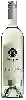
The top pink wines of Winery Haselgrove

Food and wine pairings with a pink wine of Winery Haselgrove

How Winery Haselgrove wines pair with each other generally quite well with dishes of beef or mature and hard cheese such as recipes of boeuf en daube or ham and comté quiche.
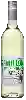
The best vintages in the pink wines of Winery Haselgrove

  • 2019With an average score of 3.80/5
  • 2017With an average score of 3.60/5
  • 0With an average score of 3.50/5

The grape varieties most used in the pink wines of Winery Haselgrove.
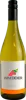
  • Grenache

The word of the wine: Reims Mountain

Between Épernay and Reims, a large limestone massif with varied soils and exposure where pinot noir reigns supreme. Ambonnay, Bouzy, Verzenay, Verzy, etc., are equivalent to the Burgundian Gevrey-Chambertin and Vosne-Romanée. There are also great Chardonnays, which are rarer (Mailly, Marmery, Trépail, Villers).

The top sparkling wines of Winery Haselgrove

Food and wine pairings with a sparkling wine of Winery Haselgrove

How Winery Haselgrove wines pair with each other generally quite well with dishes of beef, lamb or spicy food such as recipes of cornish pasties, uzbek pilaf or stuffed squid in the sétoise sauce.

The best vintages in the sparkling wines of Winery Haselgrove

  • 2012With an average score of 4.10/5
  • 0With an average score of 3.60/5
  • 2013With an average score of 3.40/5
  • 2008With an average score of 3.40/5

The grape varieties most used in the sparkling wines of Winery Haselgrove.

  • Shiraz/Syrah

Discover the grape variety: Pinot gris

Pinot Gris is a grey grape variety mutated from Pinot Noir. It has its origins in Burgundy, where it is called pinot-beurot in reference to the colour of the grey robes worn by the monks of the region. Established in Alsace since the 17th century, pinot gris was called tokay until 2007. It is made up of bunches of small berries that vary in colour from pink to blue-grey. It is particularly well suited to the continental climate because it is resistant to the cold in winter and to spring frosts. This variety also likes dry limestone soils with plenty of sunshine in the summer. Pinot Gris is well suited to late harvesting or to the selection of noble grapes, depending on the year and the concentration of sugars in the berries. Pinot Gris wines are distinguished by their aromatic complexity of white fruits, mushrooms, honey, vanilla, cinnamon, etc., and their great finesse. In the Loire Valley, pinot gris is used in the Coteaux-d'Ancenis appellations. It gives dry or sweet wines with pear and peach aromas.

The top natural sweet wines of Winery Haselgrove

Food and wine pairings with a natural sweet wine of Winery Haselgrove

How Winery Haselgrove wines pair with each other generally quite well with dishes of beef, lamb or spicy food such as recipes of spit-turned boar leg (oven) with "automatic watering"., fried vegetables with merguez and chipo or chicken massala.

Organoleptic analysis of natural sweet wines of Winery Haselgrove

On the nose the natural sweet wine of Winery Haselgrove. often reveals types of flavors of non oak, earth or microbio and sometimes also flavors of vegetal, oak or spices.

The best vintages in the natural sweet wines of Winery Haselgrove

  • 1981With an average score of 4.40/5
  • 0With an average score of 4.40/5

The grape varieties most used in the natural sweet wines of Winery Haselgrove.

  • Grenache
  • Shiraz/Syrah

The word of the wine: Clone

A vine propagated from a single specimen (by cuttings or grafting), as opposed to mass selection, which starts from a family of vines.

Discover other wineries and winemakers neighboring the Winery Haselgrove

Planning a wine route in the of McLaren Vale? Here are the wineries to visit and the winemakers to meet during your trip in search of wines similar to Winery Haselgrove.

Discover the grape variety: Chardonnay

The white Chardonnay is a grape variety that originated in France (Burgundy). It produces a variety of grape specially used for wine making. It is rare to find this grape to eat on our tables. This variety of grape is characterized by small bunches, and small grapes. White Chardonnay can be found in many vineyards: South West, Burgundy, Jura, Languedoc & Roussillon, Cognac, Bordeaux, Beaujolais, Savoie & Bugey, Loire Valley, Champagne, Rhone Valley, Armagnac, Lorraine, Alsace, Provence & Corsica.