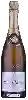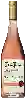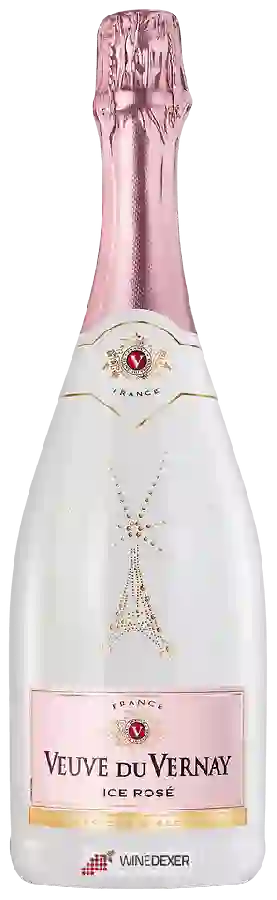
Winery Veuve du VernayIce Rosé
 Sparkling wine


In the mouth this sparkling wine is a powerful with a nice vivacity and a fine and pleasant bubble.
This wine generally goes well with poultry, appetizers and snacks or lean fish.
The Ice Rosé of the Winery Veuve du Vernay is in the top 50 of wines of Vin de France.
Taste structure of the Ice Rosé from the Winery Veuve du Vernay
Light | Bold | |
Soft | Acidic | |
Gentle | Fizzy |
In the mouth the Ice Rosé of Winery Veuve du Vernay in the region of Vin de France is a powerful with a nice vivacity and a fine and pleasant bubble.
Wine flavors and olphactive analysis




On the nose the Ice Rosé of Winery Veuve du Vernay in the region of Vin de France often reveals types of flavors of cream, cherry or citrus and sometimes also flavors of apples, peach or red fruit.
Food and wine pairings with Ice Rosé
Pairings that work perfectly with Ice Rosé



Original food and wine pairings with Ice Rosé


The Ice Rosé of Winery Veuve du Vernay matches generally quite well with dishes of shellfish, poultry or appetizers and snacks such as recipes of cuttlefish with cider, quiche lorraine or salted muffins with bacon and grated cheese.
Details and technical informations about Winery Veuve du Vernay's Ice Rosé.
Discover the grape variety: Merzling
A cross between Seyval and FR 375-52 (Riesling x Pinot Gris or Rülander) obtained in Germany in 1960 by Johannes Zimmermann. It can be found in Denmark, Belgium, Switzerland, Lithuania, the Czech Republic, etc. In France, it is practically unknown.
Last vintages of this wine
The best vintages of Ice Rosé from Winery Veuve du Vernay are 2012, 2016, 2018, 2011 and 2008.
Informations about the Winery Veuve du Vernay
The Winery Veuve du Vernay is one of of the world's greatest estates. It offers 16 wines for sale in the of Vin de France to come and discover on site or to buy online.

The wine region of Vin de France
Vin de France is the most basic level of quality for wines from France. These are generally uncomplicated everyday drinks - most often blends, but perhaps also Varietal wines based on a well-known Grape variety such as Cabernet Sauvignon, Merlot, Chardonnay or Sauvignon Blanc. Wines from France are those that do not meet the criteria stipulated by the Protected Designation of Origin (PDO) or Protected Geographical Indication (PGI) laws (see information on French wine labels). This may be because the vineyards are outside the delimited production areas or because the grape varieties or winemaking techniques used do not conform to the rules of the local appellations.
The word of the wine: Rebêche (champagne)
Must obtained in excess of the 2 550 litres authorised for a weight of 4 000 kilos of grapes. The first 2 050 litres constitute the cuvée and the next 500 litres the taille. The rebêche represents 1 to 3 % of the total volume and must be distilled or used to make ratafia.