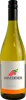
Winery l'EtoileBanyuls Rimage Seb
 Natural sweet wine
This wine generally goes well with beef and mature and hard cheese.
Food and wine pairings with Banyuls Rimage Seb
Pairings that work perfectly with Banyuls Rimage Seb


Original food and wine pairings with Banyuls Rimage Seb
The Banyuls Rimage Seb of Winery l'Etoile matches generally quite well with dishes of beef or mature and hard cheese such as recipes of wild boar with honey or rolled blue cord.
Details and technical informations about Winery l'Etoile's Banyuls Rimage Seb.
Discover the grape variety: Seyval blanc
A relative of the Saint Pepin, this direct-producing hybrid is the result of an interspecific cross between 5656 Seibel and Ray d'Or (4986 Seibel) obtained in 1921 by the Seyve-Villard company, formerly based in Saint Vallier (Drôme). Seyval blanc is registered in the official catalogue of wine grape varieties, list A. It can be found in the United States, Canada, Brazil, Australia, South Africa, Great Britain, the Netherlands, Germany, Romania, Switzerland, etc. It is practically non-existent in France and is in danger of disappearing.
Informations about the Winery l'Etoile
The Winery l'Etoile is one of wineries to follow in Banyuls.. It offers 47 wines for sale in the of Banyuls to come and discover on site or to buy online.

The wine region of Banyuls
Banyuls wines come from the South-eastern Part of Roussillon, in the south of France, in the lower Pyrenees, a few kilometres from the Spanish border. These naturally Sweet wines are consumed both as an aperitif and as a dessert. They come in a wide range of hues, from GoldenGreen (Banyuls Blanc) to Amber (Banyuls Ambré) to the intense garnet of the standard Banyuls Rouge. Unusually among the natural sweet wines of France, all Banyuls wines are made primarily from Grenache grapes of various colors.
The wine region of Languedoc-Roussillon
Languedoc (formerly Coteaux du Languedoc) is a key appellation used in the Languedoc-Roussillon wine region of southern France. It covers Dry table wines of all three colors (red, white and rosé) from the entire region, but leaves Sweet and Sparkling wines to other more specialized appellations. About 75% of all Languedoc wines are red, with the remaining 25% split roughly down the middle between whites and rosés. The appellation covers most of the Languedoc region and almost a third of all the vineyards in France.
The word of the wine: Trader-Handler
Champagne term for a merchant who buys grapes to make a Champagne wine himself.