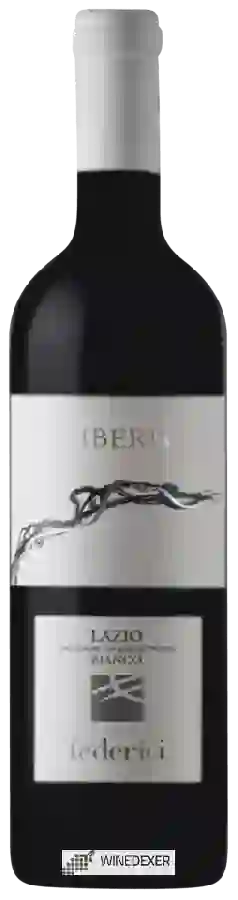
Winery FedericiTiberis Bianco
 White wine
In the mouth this white wine is a with a nice freshness.
This wine generally goes well with vegetarian, appetizers and snacks or lean fish.
Taste structure of the Tiberis Bianco from the Winery Federici
Light | Bold | |
Dry | Sweet | |
Soft | Acidic |
In the mouth the Tiberis Bianco of Winery Federici in the region of Lazio is a with a nice freshness.
Food and wine pairings with Tiberis Bianco
Pairings that work perfectly with Tiberis Bianco



Original food and wine pairings with Tiberis Bianco


The Tiberis Bianco of Winery Federici matches generally quite well with dishes of pasta, vegetarian or appetizers and snacks such as recipes of generous flaky quiche, light tuna-tomato quiche (without cream) or boquerones anchovies in vinegar.
Details and technical informations about Winery Federici's Tiberis Bianco.
Discover the grape variety: Pineau d'Aunis
The wines produced in the Vendôme region are of excellent quality thanks to an exceptional grape variety: pineau d'aunis. For example, the red wines of the region, with their aromas of ripe red fruit and sweet spices, are a blend of Pineau d'Aunis, Cabernet Franc and Pinot Noir. The Vendôme hillsides are less than 200 km southwest of Paris. Pineau d'Aunis, a vigorous black grape variety, was first cultivated in the 9th century. It is characterized by a late budburst. Moreover, its foliage partially reddens in autumn. Although it is difficult to grow, Pineau d'Aunis is a high-yielding grape variety, producing between 40 and 80 hectolitres per hectare. It produces a wine with low alcohol content, supple, light-coloured and very aromatic. The "Pineau d'Aunis" grape variety is used as a single variety for the production of Coteaux du Vendômois. On the other hand, it is used in blends for Anjou, Rosé d'Anjou, Crémant de vallée de la Loire, Rosé de vallée de la Loire, Saumur, Saumur Champigny, Coteaux du Loir and Touraine. Finally, it is an accessory grape variety for Valençay.
Informations about the Winery Federici
The Winery Federici is one of of the world's great estates. It offers 44 wines for sale in the of Lazio to come and discover on site or to buy online.

The wine region of Lazio
Lazio is a region in CentralItaly, where the ancient capital of Rome is located. The region's reputation is based primarily on its white wines, the main varieties of which are Trebbiano, Malvasia di Candia and Malvasia Puntinata. Traditionally, these wines were fat, Round, abboccato and intended for immediate consumption. Today, the styles are lighter, drier and crisper thanks to modern winemaking methods.
The word of the wine: Chai
Place where the wine-making process takes place.