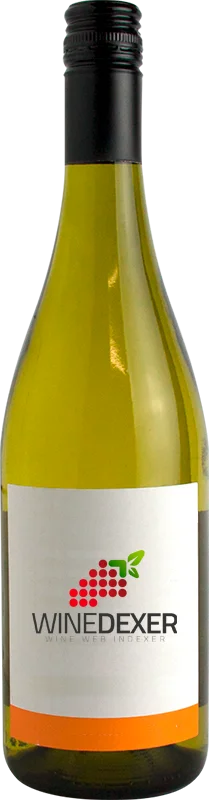
Winery FedericiGladium Bianco
 White wine


In the mouth this white wine is a with a nice freshness.
This wine generally goes well with vegetarian, appetizers and snacks or lean fish.
Taste structure of the Gladium Bianco from the Winery Federici
Light | Bold | |
Dry | Sweet | |
Soft | Acidic |
In the mouth the Gladium Bianco of Winery Federici in the region of Lazio is a with a nice freshness.
Food and wine pairings with Gladium Bianco
Pairings that work perfectly with Gladium Bianco



Original food and wine pairings with Gladium Bianco


The Gladium Bianco of Winery Federici matches generally quite well with dishes of pasta, vegetarian or appetizers and snacks such as recipes of maultaschen ( swabian ravioli ), quiche with leeks and fresh salmon from flo or happy new year bites.
Details and technical informations about Winery Federici's Gladium Bianco.
Discover the grape variety: Couderc 4401
An interspecific cross made in 1884 by Georges Couderc (1850-1928) between chasselas rose and rupestris. This direct-producing hybrid was multiplied much more in the south-west of France and in the Loire Valley, and in some cases was even used as rootstock. François Baco (1865-1947) and Vincent Malègue (1830-1915) also used it as a progenitor. - Synonymy: red bird, tank, Terray hybrid, malafosse, oazo rukh, sakhotin (for all the grape variety synonyms, click here!). - Description: small to medium-sized bunches, cylindrical-conical, winged, more or less compact, sometimes with small green berries, medium-sized stalks remaining green when ripe; small, spherical berries, beautiful bluish-black skin, very pruinose, pulpy, with coloured juice.
Last vintages of this wine
The best vintages of Gladium Bianco from Winery Federici are 0
Informations about the Winery Federici
The Winery Federici is one of of the world's great estates. It offers 44 wines for sale in the of Lazio to come and discover on site or to buy online.

The wine region of Lazio
Lazio is a region in CentralItaly, where the ancient capital of Rome is located. The region's reputation is based primarily on its white wines, the main varieties of which are Trebbiano, Malvasia di Candia and Malvasia Puntinata. Traditionally, these wines were fat, Round, abboccato and intended for immediate consumption. Today, the styles are lighter, drier and crisper thanks to modern winemaking methods.
The word of the wine: Acescence
An alteration in wine also known as pitting (hence the expression piqué wine), due to the presence of acetic acid and ethyl acetate, and characterized by a vinegar-like odor.