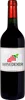
Winery Fazenda Portal Da LuzBau 9,4 Syrah
 Red wine


This wine generally goes well with beef, lamb or mature and hard cheese.
The Bau 9,4 Syrah of the Winery Fazenda Portal Da Luz is in the top 60 of wines of Sao Paulo.
Food and wine pairings with Bau 9,4 Syrah
Pairings that work perfectly with Bau 9,4 Syrah



Original food and wine pairings with Bau 9,4 Syrah

The Bau 9,4 Syrah of Winery Fazenda Portal Da Luz matches generally quite well with dishes of beef, lamb or spicy food such as recipes of homemade beef stew, 7 o'clock leg of lamb or curried veal roulades.
Details and technical informations about Winery Fazenda Portal Da Luz's Bau 9,4 Syrah.
Discover the grape variety: Rubi
Pink selection made in Brazil, following a natural coloured mutation of the italia, discovered in 1981 by San Giorgio Jonico. Since 24.08.2009, it is registered in the Official Catalogue of table grape varieties, list A1. In Italy, a more colourful mutation of the Rubi was discovered, called benitaka, which is more uniform in berry colour and ripens about a week earlier. The black brasil variety, which can be found in Brazil, is said to be a natural mutation of benitaka. Finally, Rubi should not be confused with ruby seedless, also a pink apyrene grape.
Last vintages of this wine
The best vintages of Bau 9,4 Syrah from Winery Fazenda Portal Da Luz are 2013, 0
Informations about the Winery Fazenda Portal Da Luz
The Winery Fazenda Portal Da Luz is one of of the world's greatest estates. It offers 5 wines for sale in the of Sao Paulo to come and discover on site or to buy online.

The wine region of Sao Paulo
Brazil is the largest country in South America and the fifth-largest in the world. It has a sizable wine industry, but is probably best known in global markets for spirits, and in particular Cachaça. With roughly 83,000 hectares (205,000 acres) of Vineyard">Vineyard, it ranks just behind its near-neighbors Argentina and Chile in terms of acreage under vine. Only a small proportion (about 10 percent) of these acres are planted with Vitis vinifera vines, however this large acreage does not translate into large volumes of quality wine.
The word of the wine: Left bank
In Bordeaux, refers to the vineyards located on the left bank of the Gironde, where the dominant grape variety is Cabernet Sauvignon. These are the Medoc, Haut-Médoc, Pessac-Leognan, Graves, etc. appellations.