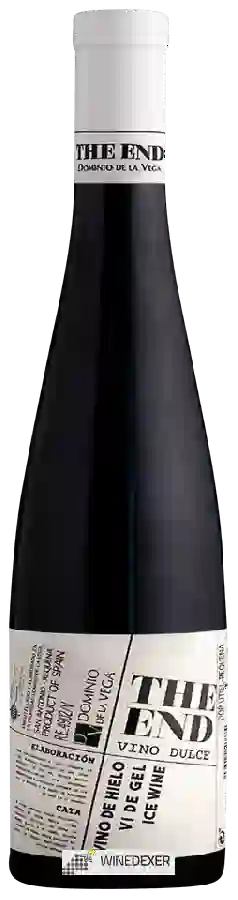
Winery Dominio de la VegaThe End Dulce
 Sweet wine


This wine generally goes well with vegetarian, rich fish (salmon, tuna etc) or shellfish.

Food and wine pairings with The End Dulce
Pairings that work perfectly with The End Dulce



Original food and wine pairings with The End Dulce
The The End Dulce of Winery Dominio de la Vega matches generally quite well with dishes of rich fish (salmon, tuna etc), shellfish or vegetarian such as recipes of sea bream with sweet spices, easy seafood gratin or leek, goat cheese and bacon quiche.
Details and technical informations about Winery Dominio de la Vega's The End Dulce.
Discover the grape variety: Peurion
Simple and barely aromatic whites with a pale golden colour, an airy palate with moderate acidity, and discreet signature aromas of white fruits and light floral notes. Confidential heritage profile. Almost extinct today, preserved in a few INRAE ampelographic collections; among the ancient varieties studied for their heritage and genetic interest. Rare French white variety, formerly grown in the South-West and the Rhône Valley.
Last vintages of this wine
The best vintages of The End Dulce from Winery Dominio de la Vega are 2017, 2018, 2016, 0
Informations about the Winery Dominio de la Vega
The Winery Dominio de la Vega is one of of the world's great estates. It offers 51 wines for sale in the of Utiel-Requena to come and discover on site or to buy online.

The wine region of Utiel-Requena
DO in southeastern Spain, west of Valencia on a plateau at 750 m. Signature Bobal (80%, a native almost exclusive to here): dense, deeply coloured reds with signature notes of black cherry, blackberry, plum, wild herbs and a balsamic touch, firm tannins and lively acidity - old vines >40 years on over half the vineyard. Also spicy Tempranillo, round Garnacha, dense Cabernet Sauvignon. Saline rosés.
The wine region of Valence
Sunny Mediterranean Levant, sun-drenched accessible wines. Monastrell (Mourvèdre) star red in Alicante: fleshy and deep with black fruits, garrigue, leather and spice, firm tannins. Round, fruity Bobal from Utiel-Requena, supple Garnacha, juicy Tempranillo. Fresh whites: light Merseguera, aromatic Moscatel (fresh grape, flowers).
The word of the wine: Short
Said of a wine that leaves little trace in the mouth after tasting (also called "short in the mouth").