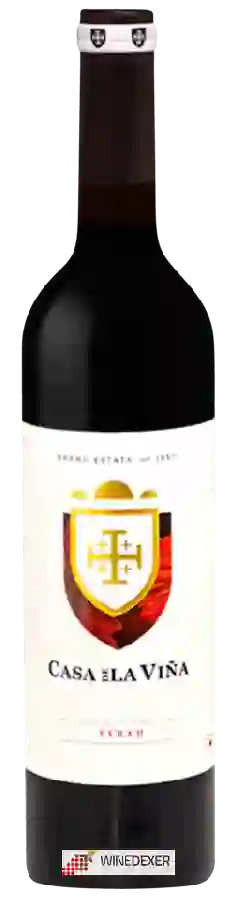
Winery La PlataSyrah
 Red wine


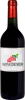
In the mouth this red wine is a powerful with a lot of tannins present in the mouth.
This wine generally goes well with poultry, beef or game (deer, venison).

Taste structure of the Syrah from the Winery La Plata
Light | Bold | |
Smooth | Tannic | |
Dry | Sweet | |
Soft | Acidic |
In the mouth the Syrah of Winery La Plata in the region of Castille is a powerful with a lot of tannins present in the mouth.
Food and wine pairings with Syrah
Pairings that work perfectly with Syrah



Original food and wine pairings with Syrah

The Syrah of Winery La Plata matches generally quite well with dishes of beef, lamb or game (deer, venison) such as recipes of veal shank with mushrooms, rack of lamb with herbs or cassoulet with duck confit.
Details and technical informations about Winery La Plata's Syrah.
Discover the grape variety: Italia Rubi
Table grape with long bunches and elongated red-violet berries, thin skin and muscat-flavoured flesh, sweet and aromatic taste. Rarely vinified. Grown for fresh consumption in Italy, Spain, the Maghreb and South America, appreciated for its attractive appearance and muscat flavour in mass retail. Italian black table grape variety, a red-violet skin mutation of the Italia grape.
Last vintages of this wine
The best vintages of Syrah from Winery La Plata are 2016, 0
Informations about the Winery La Plata
The Winery La Plata is one of of the world's great estates. It offers 30 wines for sale in the of Castille to come and discover on site or to buy online.

The wine region of Castille
Cradle of great Castilian reds, high-altitude plateaus (450-1000 m) along the Duero. Tempranillo king (aka Tinta de Toro, Tinto Fino): powerful, concentrated, structured reds with notes of black cherry, plum, leather, tobacco and spice, firm tannins from altitude and cool nights. Stars: Ribera del Duero (Vega Sicilia, Pingus), fleshy Toro, Bierzo (floral, mineral Mencía). Lively, herbaceous Verdejo whites from Rueda.
The word of the wine: Filling
Gentle transfer from one barrel to another to oxygenate the wine, eliminate some of the lees and reduce the carbon dioxide (fizz) that was released during the fermentations.